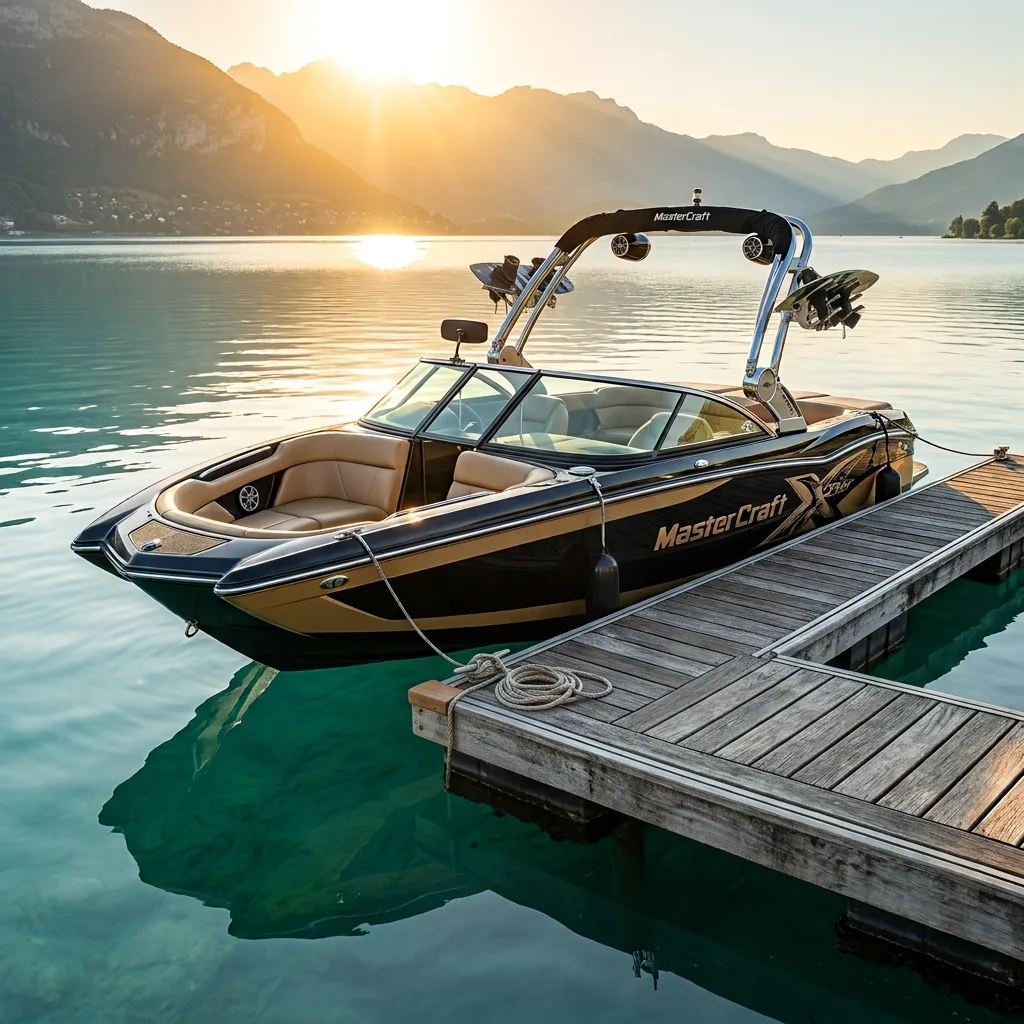
There are two ways to look at a boat. The first is the price on the listing: €40,000, €60,000, €100,000 or more. The second is what that boat really costs you over the years you own it.
And between the two, the gap can be huge.
A boat that sits at the dock for much of the year keeps costing you money. The berth, the insurance and part of the maintenance don’t disappear just because you didn’t go out. On top of that come repairs, equipment to replace and possible depreciation when you sell.
That is exactly what makes boat sharing appealing: several users share access to a boat and, depending on the arrangement, part of the ownership costs. But beware of shortcuts. Sharing a boat is not automatically cheaper, any more than owning one on your own is necessarily a needless luxury.
At MB74, we prefer to put the numbers on the table before drawing any conclusion. Let’s take a concrete example, single out the expenses people often forget and see when each option makes sense.
1. The real cost of a boat: the purchase price is only the beginning
When you buy a boat, you naturally look at the purchase price. That’s normal: it’s the most visible amount, the one you have to finance up front.
But to know whether the purchase is reasonable, you need to look at the cost of ownership over the whole period of use. A boat bought for €60,000 and sold a few years later for €45,000 hasn’t necessarily cost its owner €60,000. Then again, it hasn’t cost only €15,000 either, because it had to be financed, insured, maintained and moored during that time.
The expenses to include in the calculation
- Depreciation: the difference between the purchase price and the resale price. It depends in particular on the model, age, condition, maintenance and the used boat market.
- Financing: the interest and fees on any loan. Repaying the principal should not be counted a second time as an economic cost if the calculation already includes the boat’s loss of value.
- Marina berth or mooring: the amount varies widely depending on the body of water, the length of the boat and the type of berth.
- Insurance: its cost depends in particular on the boat’s value, engine, use, cruising area and coverage.
- Routine maintenance: annual services, consumables, inspections and the work needed to keep the boat in good condition.
- Repairs and replacements: a battery, an electronic system, upholstery or engine equipment can be a significant expense.
- Winterization and handling: depending on the boat and where it is kept, you may need to budget for storage on land, haul-out, relaunch or seasonal protection work.
- Fuel: it depends on the distance covered, the engine, the speed and how you use the boat.
- Equipment and upgrades: electronics, accessories, safety gear, comfort features and any upgrades.
Not all of these expenses apply in the same way to every boat. A small boat kept on a trailer doesn’t cost the same as a cruiser that stays in the water all year round. Likewise, a recent, well-maintained boat doesn’t carry the same repair risk as an older model with an incomplete history.
2. Boat sharing and outright purchase: two different economic models
Before comparing figures, you need to be clear about what you are comparing. The word “boat sharing” can cover several arrangements: co-ownership between private individuals, a company that owns a boat and makes it available to several members, or an organized service with access fees and bookings.
These options don’t have the same financial consequences or the same usage rights. In a co-ownership, you may hold a share of the boat and take part in decisions. In a sharing service, you may simply pay to use a boat without owning it.
In this article, we compare buying a boat outright with a sharing arrangement in which several users split access and, depending on the contract, all or part of the expenses. The figures below are illustrative simulations, not rates observed with any particular operator.
| Criterion | Outright purchase | Boat sharing |
|---|---|---|
| Capital to commit | Full purchase price, plus any fees | A purchase share, a joining fee or a subscription, depending on the model |
| Fixed costs | Borne by the owner | Shared or included in the plan’s fees depending on the contract |
| Maintenance and repairs | Paid by the owner | Covered according to the arrangement and the sharing rules |
| Availability | In principle, according to your own constraints and those of the boat | According to bookings and access rules |
| Customization | Greater freedom, within applicable limits | Subject to the contract and, where relevant, the agreement of the other owners |
| Resale | You keep the sale proceeds, after fees and repayment of any loan | Depends on the model: resale of your share, or no resale value for the user |
| Financial risk | Concentrated on a single owner | Spread in some arrangements, but not necessarily eliminated |
This is the key point: boat sharing doesn’t make the costs of a boat disappear. It lets you split them or fold them into a service. The result therefore depends on the number of participants, the price charged, the extra fees and the usage rules.
3. A concrete example: a boat bought for €60,000
To make the comparison easy to follow, let’s take a boat bought for €60,000, kept for five years and then sold. We’ll calculate its cost of ownership before fuel and the expenses directly tied to each outing.
The assumptions are deliberately simplified. They are there to illustrate the method and are not an estimate of the average cost of a boat on the French market.
| Assumption over five years | Amount |
|---|---|
| Purchase price | €60,000 |
| Resale value after five years | €45,000 |
| Estimated loss of value | €15,000 |
| Marina berth or mooring per year | €2,000 |
| Insurance per year | €600 |
| Maintenance and repair allowance per year | €1,500 |
| Total annual costs over five years | €20,500 |
| Cost of ownership over five years, excluding financing, fuel and selling costs | €35,500 |
The calculation is as follows:
€15,000 loss of value + 5 × (€2,000 + €600 + €1,500) = €35,500.
In other words, with these assumptions, the economic cost of the boat comes to €7,100 per year on average, before fuel, financing and other expenses not included.
This figure doesn’t mean the owner has to take exactly €7,100 out of their account every year. The purchase price and the resale price come at different times. It is an average economic cost over the period, not a cash-flow schedule.
If the boat is bought on credit, you need to add the interest and financing fees. If its resale value is lower than expected, the cost goes up. Conversely, a particularly well-negotiated purchase and a favorable resale can reduce the loss of value.
4. How much does a day on the water really cost?
Here is the calculation that often changes the picture: the cost of ownership has to be divided by the number of days the boat is actually used.
Let’s go back to our example, with a cost of ownership of €7,100 per year, excluding fuel, financing and costs not included.
| Days on the water per year | Annual cost of ownership | Cost of ownership per day |
|---|---|---|
| 5 days | €7,100 | €1,420 |
| 10 days | €7,100 | €710 |
| 20 days | €7,100 | €355 |
| 30 days | €7,100 | about €237 |
These amounts still don’t include fuel or other expenses directly tied to outings. They only show the effect of the number of days used on the fixed, economic cost of ownership.
The conclusion is simple: the more you go out, the more you spread the fixed costs over a large number of days. If you only go out five days a year, each day carries a large share of the cost of ownership. At thirty days, the fixed cost per day drops sharply.
Be careful, though, of a common mistake: using this table to conclude that renting is automatically cheaper. To compare with boat sharing or rental, you also need to know their full price per day, any subscriptions and the booking conditions.
5. Boat sharing: when does it start to make sense?
Boat sharing can reduce the cost borne by one person because several users share access to the same boat. But there are two distinct models.
Sharing a boat owned jointly
In a co-ownership, each participant finances a share of the purchase and contributes to the shared costs. The individual cost can therefore be lower than with an outright purchase.
But the savings are not automatically proportional to the number of owners. If three people own a boat, they share the cost, but they also have to share the time slots on the water. If everyone wants to go out on the same weekends, the calendar becomes a scarce resource.
You also need to factor in how a share can be sold, how work is divided and what happens if a co-owner can no longer contribute to the expenses.
Sharing through an operator
With a boat sharing service, you may pay a membership, a subscription or per-use fees without owning a share of the boat. The operator then organizes access and management according to its own model.
This option can limit the hassles of ownership, but you need to check what the price covers: maintenance, insurance, fuel, booking fees, security deposit and any extras. You also need to understand the availability rules and the cancellation terms.
So the question to ask is not simply “how much does boat sharing cost?” but rather: how much will this plan cost me for the number of outings I actually want to make, with the boats and time slots I need?
6. Simulation: buying outright or sharing with others?
Let’s go back to the assumptions for our €60,000 boat. We estimated its economic cost of ownership at €35,500 over five years, or €7,100 per year, before financing, fuel and costs not included.
Now suppose three people buy this same boat in equal shares, with the costs and loss of value split strictly in proportion. In this simplified example, each one bears a third of the economic cost.
| Over five years | Outright purchase | Shared by three |
|---|---|---|
| Share of the purchase price | €60,000 | €20,000 per person |
| Estimated total economic cost | €35,500 | about €11,833 per person |
| Average annual economic cost | €7,100 | about €2,367 per person |
In this scenario, sharing significantly reduces the individual cost. But the comparison is only fair if the three participants have usage rights that match their needs and if the costs really are split this way.
Individual cost is not the only criterion. A sole owner enjoys much greater availability and decides how the boat is used. Co-owners have to agree on time periods, expenses and changes to the boat.
Another key point: the calculation assumes that each person gets back their share of the resale value, in proportion to their ownership. In a sharing service without ownership, the user gets no resale value back. The two models should therefore not be confused.
7. The cost people forget: tied-up capital
When you buy a boat with cash, you commit a sum that can no longer be used elsewhere. That money could have stayed available, gone toward another project or earned a return.
This opportunity cost doesn’t appear on a marina or maintenance invoice, but it is part of a complete financial analysis.
That said, you shouldn’t count the same thing twice. If you calculate the economic cost of ownership by including depreciation and loan interest, don’t arbitrarily add the repayment of the principal as an extra cost. On the other hand, if you want to compare a cash purchase with another possible use of your money, you can estimate separately the return you are giving up.
For a boat bought on credit, the picture is different from a cash-flow point of view: you need to be able to pay the installments, insurance, berth and maintenance throughout the year. A project can make sense on paper and still be hard to finance if the outgoings are concentrated at the wrong time.
Boat sharing often reduces the initial capital required, or even eliminates it in access plans without ownership. That is a major advantage for people who don’t want to tie up tens of thousands of euros in a boat used a few weeks a year.
8. And what about fuel?
Fuel should be treated separately from fixed costs, because it depends on the number and type of outings. A boat used for short cruises at moderate speed won’t have the same budget as a powerful boat used for watersports.
To make an estimate, start from how you actually use the boat: length of outings, distance covered, engine, usual speed and fuel price. Real consumption can vary considerably depending on the load, the conditions, the state of the sea or lake and the way you drive.
In a co-ownership, it often makes sense for each user to pay for the fuel used during their outings. With a boat sharing service, fuel may be included, billed separately or calculated according to the provider’s terms. In every case, check the contract.
So don’t compare a plan where fuel is included with another where it is extra without factoring that difference back into the calculation.
9. The pitfalls that skew the comparison
Comparing the purchase price with the price of a subscription
A €60,000 purchase and an annual subscription are not comparable amounts. One is the acquisition of an asset that can be resold; the other gives access to a service under defined conditions. You need to compare the total cost over an equivalent period.
Forgetting about resale
The purchase price is not entirely lost if the boat keeps a market value. But that value is not guaranteed. Condition, maintenance, the used boat market and any work needed at the time of sale can change the result.
Underestimating repairs
An average annual budget is not always enough to absorb a major job. Set aside a reserve for exceptional expenses, especially on a used boat with an incomplete history.
Overestimating the number of outings
A boat bought for thirty days on the water a year costs much more per day if it ends up going out only eight. Work, weather, family life and the unexpected often cut into real use more than you planned.
Forgetting about availability with boat sharing
An attractive price isn’t much use if the time slots you want aren’t available. Before committing, check the booking rules, the high-demand periods and the cancellation terms.
Overlooking the terms for leaving the arrangement
In a co-ownership, the sale of a share needs to be planned ahead. With a sharing service, check the cancellation terms, any fees and the commitments still owed. The flexibility advertised must be confirmed by the contract terms.
10. So, should you buy on your own or choose boat sharing?
Buying outright generally makes more sense if you go out often, if you want your boat available whenever you like and if you are willing to handle the upkeep and logistics yourself. The more the boat is used, the more the fixed costs are spread over many days. Freedom of use and the ability to customize the boat also have value, even if they can’t be reduced to a figure on a spreadsheet.
Boat sharing is especially appealing if you want to limit the capital you commit and share the costs of a boat you wouldn’t use enough on your own. It can also suit you if you prefer to hand off part of the management. In exchange, you accept structured access and shared rules.
For very occasional outings, it may also be worth comparing these two options with one-off rental. It avoids an annual commitment, but its cost depends on the number of days, the boats chosen and the fees included.
There is no universal number of days beyond which buying automatically becomes the better deal. That threshold depends on the real cost of the boat, its resale value, its running costs, the price of sharing and how much availability you need.
The best choice is the one that takes into account both the numbers and the way you enjoy boating. If you want a boat ready to go whenever the mood strikes, ownership can justify a higher cost. If you mainly want to enjoy a few great days on the water, paying for shared access may make far more sense.
And if you are thinking of buying a boat, new or used, take the time to assess its condition and maintenance costs before you commit. You can also read our pages on boat service and repair and used boats.
FAQ: boat sharing or outright purchase
Is boat sharing always cheaper than buying a boat?
No. It can reduce the individual cost by spreading the expenses or by avoiding a purchase, but the result depends on the price, extra fees, the number of outings and the usage rights. An owner who goes out very often can absorb their fixed costs more efficiently than an occasional user.
How much does a boat really cost per year?
There is no universal figure. The cost depends in particular on the purchase price, depreciation, the berth, insurance, maintenance, repairs, financing and fuel. To get a serious estimate, draw up a budget suited to the model and to where you go boating.
How do you calculate the real cost of a boat?
Over a given period, add up the running costs, financing costs and estimated loss of value, then subtract the amounts recovered at resale according to the calculation method you use. Separate fixed expenses from the variable costs tied to outings, and avoid counting the repayment of the principal or the value of the boat twice.
Does sharing a boat let you split all the expenses?
Not necessarily. Shared costs can be split between participants, but fuel, consumables and some damage may be charged to the user concerned, depending on the agreement and the insurance. Exactly how it works depends on the contract or the ownership structure.
Can you sell your share in a shared boat?
In a co-ownership, transferring a share depends on the legal framework and the agreements between owners. It is advisable to define in advance the exit terms, how the share will be valued and any right of first refusal. In a sharing service without ownership, the cancellation terms are those of the contract.
Should resale value be included in the calculation?
Yes. To estimate the economic cost of ownership, you need to take into account the difference between the purchase price and the resale price. This value remains an estimate: it depends on the market, the condition of the boat and any work needed at the time of sale.
Is boat sharing a good fit for a family that mostly goes boating on vacation?
It can be, provided the plan lets you book the periods you want. Check the rules for vacation periods, the options for longer bookings and the boats suited to the number of passengers. Also compare the cost of the plan with that of a one-off rental.
At MB74, our belief is simple: the right calculation isn’t the one with the smallest number, but the one that reflects how you really use the boat. A boat should help you spend more time on the water, in good conditions, without burdening you with a budget or a schedule that ends up keeping you away from it.