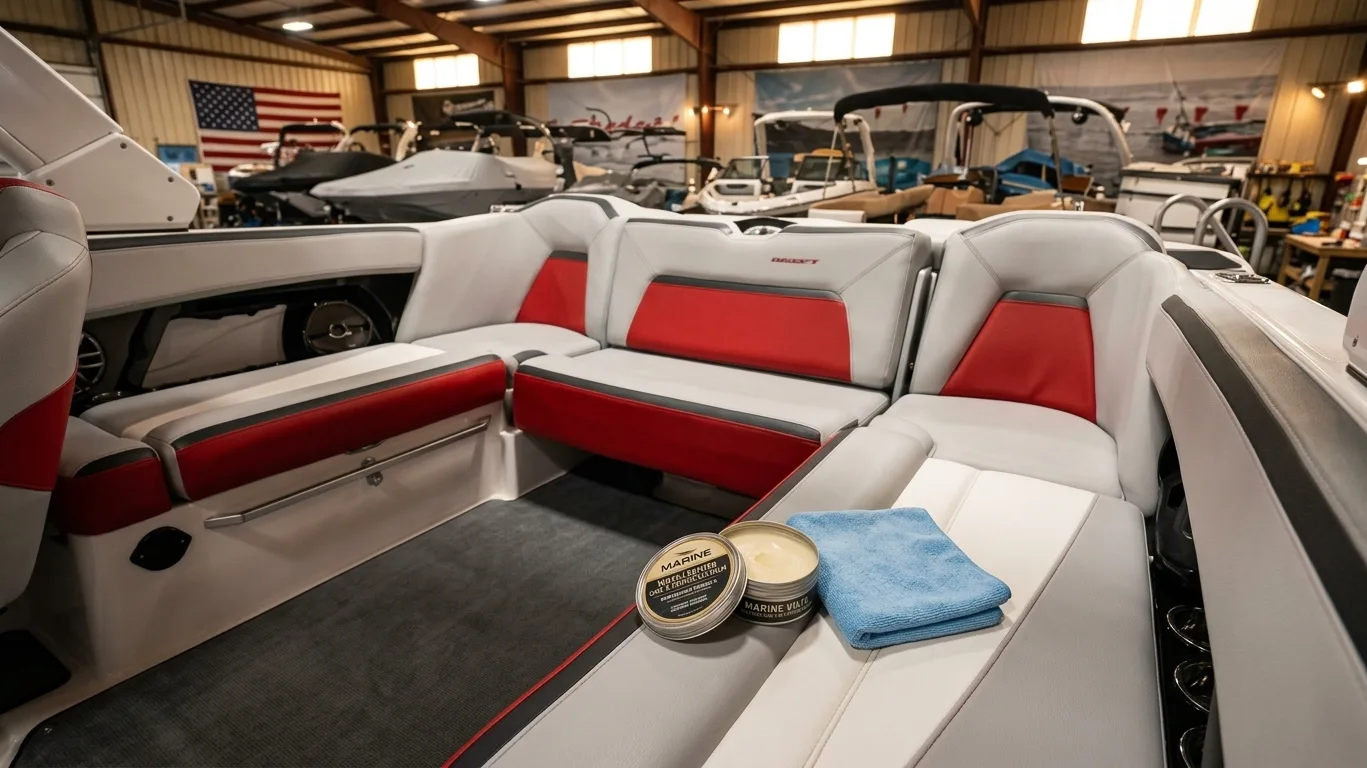

A bench splitting at a seam, a backrest starting to crack, a musty smell that comes back every time you open the storage locker: upholstery is often the first place where a boat shows its age. It's also a cost people underestimate, because they think “fabric” when the work involves the foam, the seat bases and the removal just as much as the covering.
Before asking for a quote, you need to know whether the condition of your cushions really calls for a full redo, what drives the bill up or down, and which material suits the way you use your boat. The Motor Boat 74 boat upholstery service can then price the project based on your boat.
When should you reupholster your boat?
A thorough cleaning fixes a lot of cosmetic problems. It won't repair a cracked covering or waterlogged foam. So the useful question is: is the defect on the surface or in the structure of the cushion?
Signs that work is needed
Several symptoms, especially when they add up, show that reupholstering is more sensible than repairing:
- cracks or tears that keep spreading instead of staying isolated;
- seams opening up, often because the thread has aged in the sun before the fabric;
- sagging foam that no longer springs back and makes the seat uncomfortable;
- mold or odors that come back after cleaning;
- a covering that is peeling, faded or has turned sticky.
Repair one section or redo everything?
A single seat, damaged in an accident or by a sharp object, can often be redone on its own. But if the rest of the upholstery is the same age, with the same thread and the same vinyl, the new piece will stand out from the old ones, in both color and wear. Ask the professional to price both scenarios: the targeted repair and the complete set. The price difference helps you decide without relying on gut feeling.
What determines the cost of reupholstering a boat?
No serious price can be quoted without seeing the boat: the same hull length can mean a few simple cushions or a full interior with piping, logos and molded sections. Amounts vary with the model, the number of pieces and the finish, so only a detailed quote counts. What you can compare, on the other hand, are the items it's made up of.
| Quote item | What makes it vary | What to ask |
|---|---|---|
| Removal and refitting | Access to the fasteners, number of pieces | Who removes and refits, and how long it takes |
| Foam | Full replacement, partial replacement or keeping it | Density and type of foam planned |
| Covering | Vinyl, leather or fabric, color, grain | Exact reference of the material |
| Sewing and fabrication | Decorative stitching, piping, complex shapes, embroidery | Type of thread, linings, finishes |
| Seat bases | Bases to repair, fasteners to replace | Whether the bases are included or billed separately |
Marine vinyl, fabric or leather: which material should you choose?
The right material depends on what you do with the boat, not on how prestigious the covering is. A wake or ski boat gets wet passengers, sunscreen and session after session. A cruising boat, used in fine weather and stored under cover, copes more easily with a demanding covering.
| Material | Strengths | Watch points |
|---|---|---|
| Marine vinyl | Designed for the marine environment, with UV and mildew treatments, easy to clean with soapy water | Gets hot in the sun, especially in dark colors; keep away from harsh products |
| Leather | High-end feel and look | Sensitive to moisture and heat, needs more regular care, especially in winter |
| Technical fabric | Comfortable, less scorching in the sun | Holds water and dirt if it isn't designed for immersion; check it suits your use |
For most active boaters, marine vinyl offers the best balance between durability, ease of care and budget. If leather appeals to you, first read how to protect your boat's leather upholstery from moisture in winter: it will tell you whether you're ready to look after it. Never choose a material without knowing its exact reference and the manufacturer's care instructions.
What should you do at the same time so you don't have to start over in two years?
New covers alone won't do it. When upholstery ages badly, the cause is often what lies underneath or around it.
- The foam: tired or waterlogged foam gives a sagging shape within a few months, even under new vinyl.
- The sewing thread: ask for UV-resistant thread designed for outdoor use. It's often the first thing to fail.
- Seat bases and fasteners: a damaged panel or a corroded fastener shows up after fitting, not before.
- Drainage and ventilation: a seat that doesn't dry out becomes a breeding ground for mold again.
Mercury Marine also recommends taking worn cushions to an upholstery shop that can make exact copies with new foam and marine vinyl. The same idea works for the original cushions of a recent boat: you can recreate the existing design or take the opportunity to change the style, as long as it's planned from the quote stage.
Should you redo the upholstery before selling your boat?
The answer depends on the boat's age and the standard of its interior. Stained or cracked upholstery weighs on a buyer's first impression, and they sometimes conclude that the boat has been poorly maintained overall. But the cost of the work isn't always recovered in the sale price.
Before deciding, compare the reupholstering quote with the price difference you hope to gain, and ask for advice on the boat's overall condition. To understand what buyers look at, the guide to buying a used boat in Annecy and Haute-Savoie details the checkpoints of a savvy buyer. If you're keeping the boat for several seasons, reupholstering is mainly justified by the comfort and safety of the seating.
How do you protect new upholstery and choose the right time?
Upholstery work is best scheduled in the off-season, when the boat isn't being used. If your boat is already out of the water for the winter, make the most of it: boat storage & winterization in Annecy lets you organize the upholstery alongside the rest of the end-of-season work. The exact lead time depends on the shop's workload: ask for it in writing.
Once the upholstery is fitted, its lifespan depends on simple habits. In its marine vinyl care tips, Crestliner advises against bleach and pressure washers. It also warns against silicone-based automotive products, which can alter the properties of marine vinyl, and stresses the value of good ventilation during storage.
Torn between a partial repair and a full reupholstering? Send us your boat's model, year and photos of each seat: the quote will detail the scope, the foam and the material chosen.
FAQ
How long does it take to reupholster a boat?
The lead time depends on the number of pieces, the complexity of the work and the shop's workload. It's confirmed when the quote is drawn up, not in advance. In the off-season, it's usually easier to get a slot before the boat goes back in the water.
Can you redo only part of the upholstery?
Yes, when only one piece is damaged. Keep in mind that the new seat won't age like the old ones: the color and texture may differ. If the rest is the same age, compare the price of a complete set.
Can you keep the original foam?
It's possible if the foam is sound, dry and has kept its shape. Crushed, smelly or waterlogged foam must be replaced: it reduces comfort and can ruin the new covering. The professional will tell you what they find when they open the cushions.
Does mold on the upholstery mean it has to be redone?
Not always. Proper cleaning is enough when the mold stays on the surface. If it comes back quickly after thorough drying, it may be coming from the foam or from poor ventilation, and redoing the cushion should then be considered.
Is leather suitable for a boat used on a lake?
Yes, provided you accept more regular care and protect the seats well from moisture and heat, especially during winter storage. For heavy use with wet passengers, marine vinyl needs less attention.