When you own a boat on a lake, antifouling bottom paint is often a source of confusion.
“I only boat in fresh water, so I don’t need it.”
Or, the other way around: “You have to redo the bottom paint every year before launching.”
In reality, neither statement holds true across the board.
A boat that comes out of the water after every outing doesn’t have the same needs as a boat that stays moored for several months. Likewise, a hull bottom that quickly gets covered in algae isn’t treated the same way as a hull that stays clean all season.
The right decision therefore starts from how the boat is actually used, not just from the fact that it runs in fresh water.
Can a boat used in fresh water still need bottom paint?
Yes.
Bottom paint (antifouling) is used to limit the adhesion and growth of fouling on the submerged parts of the hull. This isn’t something that only affects boats at sea.
In fresh water, a hull bottom left in the water can also gradually become covered with biofilm, algae and other organisms. International Yacht Paint points out that antifouling paints are designed to limit various forms of fouling on submerged surfaces.
So the issue isn’t the absence of salt. It’s how long the hull bottom stays submerged and in what conditions.
A boat used for a few hours and then pulled back onto its trailer obviously doesn’t have the same level of exposure as a boat left in the water all summer.
| How the boat is used | Bottom paint? | Why? |
|---|---|---|
| Boat taken out of the water after every outing | Often unnecessary | Limited time in the water |
| Boat occasionally left in the water for a few days | Assess case by case | The actual level of fouling is what matters |
| Boat left in the water for several weeks | Often worthwhile | The hull bottom stays submerged long enough to get fouled |
| Boat in the water all season | Generally worthwhile | Continuous protection against fouling |
| Boat rarely used but left in the water | Worth serious consideration | A hull sitting still remains exposed to fouling |
Why does a hull bottom get dirty in fresh water too?
A submerged hull bottom is a surface on which various kinds of fouling can gradually develop.
The first sign isn’t necessarily dramatic. It may be a simple film on the gelcoat, then a more visible buildup on the areas that stay constantly underwater.
Over time, fouling can become heavy enough to increase the hull’s drag.
For a powerboat, a dirty hull bottom can then have real consequences: lower efficiency, different handling and the need for more power to reach the same performance.
The level of fouling varies enormously, however, depending on the body of water, the temperature, the time in the water, the exposure and the type of boat.
So there is no universal timeline along the lines of “after three weeks, bottom paint is mandatory.”
What about Lake Annecy: do you need bottom paint?
For a boat used on Lake Annecy, the answer again needs to be tailored to how it is used.
A boat that stays in the water for a long period isn’t in the same situation as a boat that is regularly taken out of the water and cleaned.
But there is another reason to pay attention to the condition of the hull bottom: cleaning boats plays an important role in preventing the spread of aquatic invasive species.
The City of Annecy points out that the lake is subject to prevention measures related in particular to the quagga mussel and states that boats must be inspected, drained and cleaned before launching.
Cleaning the hull should therefore not be seen solely as a matter of appearance or performance.
For a boat that moves from one body of water to another, it also becomes an environmental prevention measure.
When is bottom paint really useful?
There are several situations in which applying bottom paint in fresh water is fully justified.
The boat stays in the water all season
This is the most obvious case.
If the boat spends several months on a mooring or in a marina, the hull bottom is constantly submerged. The goal of bottom paint is then to limit the buildup of fouling throughout that period.
In this case, choosing a coating suited to fresh water and to the planned time in the water makes sense.
The hull bottom gets dirty quickly
Two boats on the same lake may not show exactly the same level of fouling.
If, every time the boat comes out of the water, the hull has a heavy layer of algae or deposits, that’s a clear sign that bottom paint may be worthwhile.
Conversely, if the hull bottom stays clean despite a full season of use, there isn’t necessarily any reason to add a coat of paint just because a new season is starting.
The boat is hard to take out regularly
A boat that stays in the water for several weeks because it is heavy, hard to move or moored in a marina is more exposed to fouling than a small boat regularly pulled back onto its trailer.
Bottom paint then becomes a practical tool for spacing out hull bottom cleanings.
When can you do without bottom paint?
On the other hand, some boats can do perfectly well without bottom paint.
The typical case is a boat that is taken out of the water after every use, or very regularly.
The time spent in the water is then short enough that fouling doesn’t have time to build up significantly.
In this setup, a well-maintained hull can simply be washed and checked regularly.
Be careful, though, not to turn this observation into an absolute rule. If the boat ends up staying in the water for several weeks over the summer, the situation changes.
Do you need to redo the bottom paint every year?
No, not necessarily.
How long bottom paint lasts depends on the product used, its thickness, the boat’s exposure and the boating conditions.
Manufacturers offer different technologies and protection periods. Some products are designed for use in both fresh and salt water, while other coatings are specifically intended for fresh water. Jotun, for example, offers biocide-free solutions specifically designed to protect hulls in fresh water.
So don’t think only in terms of “one year = one more coat.”
Before repainting, look at:
- the condition of the existing coating;
- its adhesion;
- its thickness;
- its level of wear;
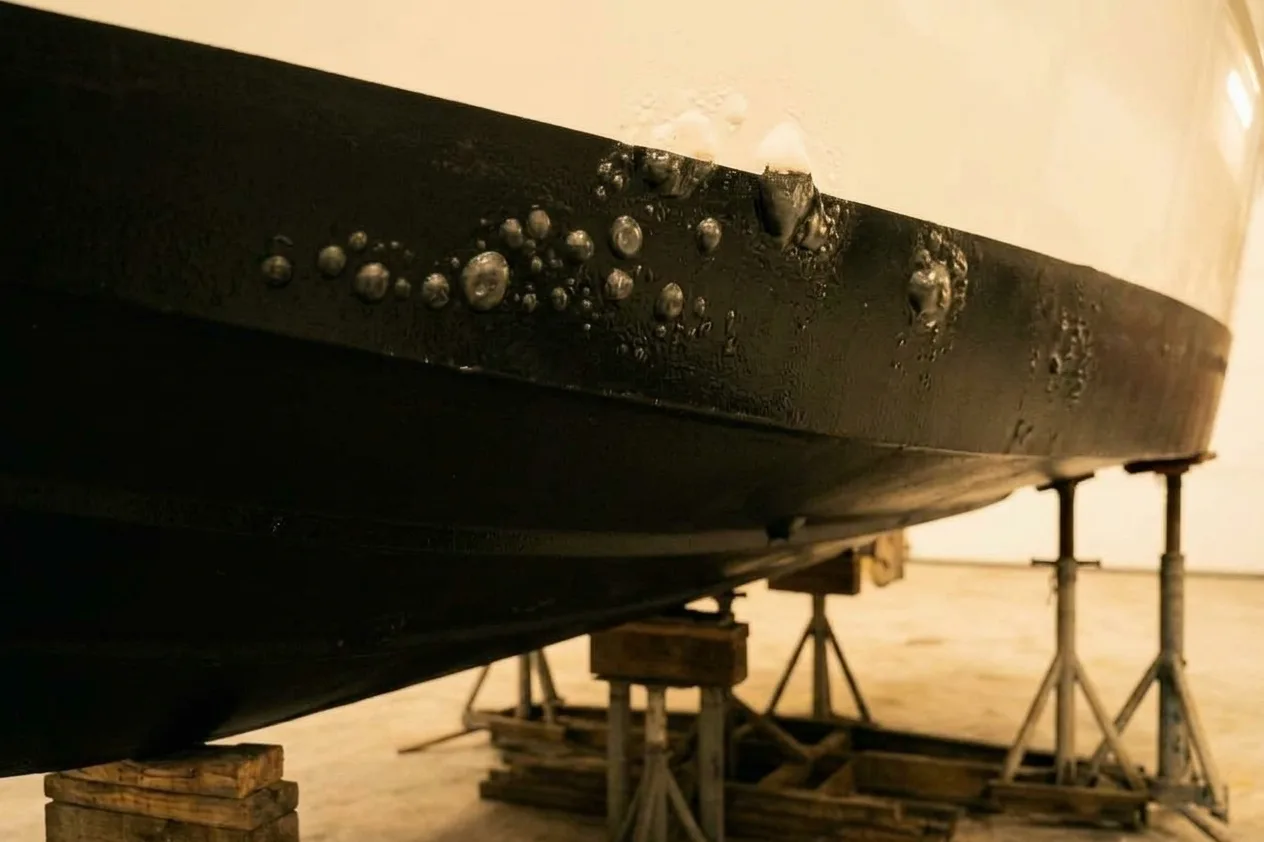
- any blistering, cracking or peeling;
- its compatibility with the product you plan to use.
International in particular recommends inspecting the old coating before any new application and checking its compatibility with the new bottom paint.
Which bottom paint should you choose for a boat in fresh water?
Don’t choose a product just because the can says “antifouling.”
The product must be compatible with how the boat is used, the body of water, the hull material and the existing coating.
There are different technologies: hard, ablative or self-polishing bottom paints, as well as biocide-free fouling-control solutions.
For a fast boat or one used on a lake, the demands can also differ from those of a sailboat sitting on a mooring for months on end.
The choice should therefore be based on the boat and how it is used, not simply on the price of the product.
Bottom paint or simple hull protection: what’s the difference?
It’s important not to mix up different treatments.
Bottom paint aims to limit fouling on submerged surfaces.
An epoxy barrier coat addresses a completely different issue: it concerns protecting the laminate and managing the risk of osmotic blistering depending on the condition and construction of the hull.
A polish or gelcoat protection treatment mainly concerns the exterior surfaces and is not meant to replace bottom paint when the hull bottom stays submerged.
Before deciding to paint, identify the problem you’re actually trying to solve.
What should you check before redoing bottom paint?
This is often where the difference between a lasting job and a simple coat of paint shows.
Preparing the hull is at least as important as choosing the bottom paint.
Before applying a new product, examine the old coating:
- is it still adhering properly?
- is it flaking?
- does it show cracks or blisters?
- have several old coats built up?
- do you know which product was applied before?
- is the underlying surface sound?
If the old bottom paint is in poor condition, applying a new coat over it won’t solve the problem.
International recommends removing coatings that are peeling or poorly bonded and checking the compatibility of old and new systems. The manufacturer also specifies that antifouling paints must not be dry-sanded for health and safety reasons.
Bottom paint on a fast boat: choose the product carefully
A fast powerboat isn’t subject to the same demands as a boat sitting still on a mooring.
Areas heavily exposed to turbulence, notably the chines, the waterline, the appendages and certain parts of the hull bottom, can see greater wear of the coating.
Manufacturers often recommend reinforcing protection on particularly stressed areas. International, for example, advises an extra coat on areas subject to more turbulence and wear.
For a wake boat or a powerboat used regularly on Lake Annecy, this point deserves to be considered when choosing the protection system.
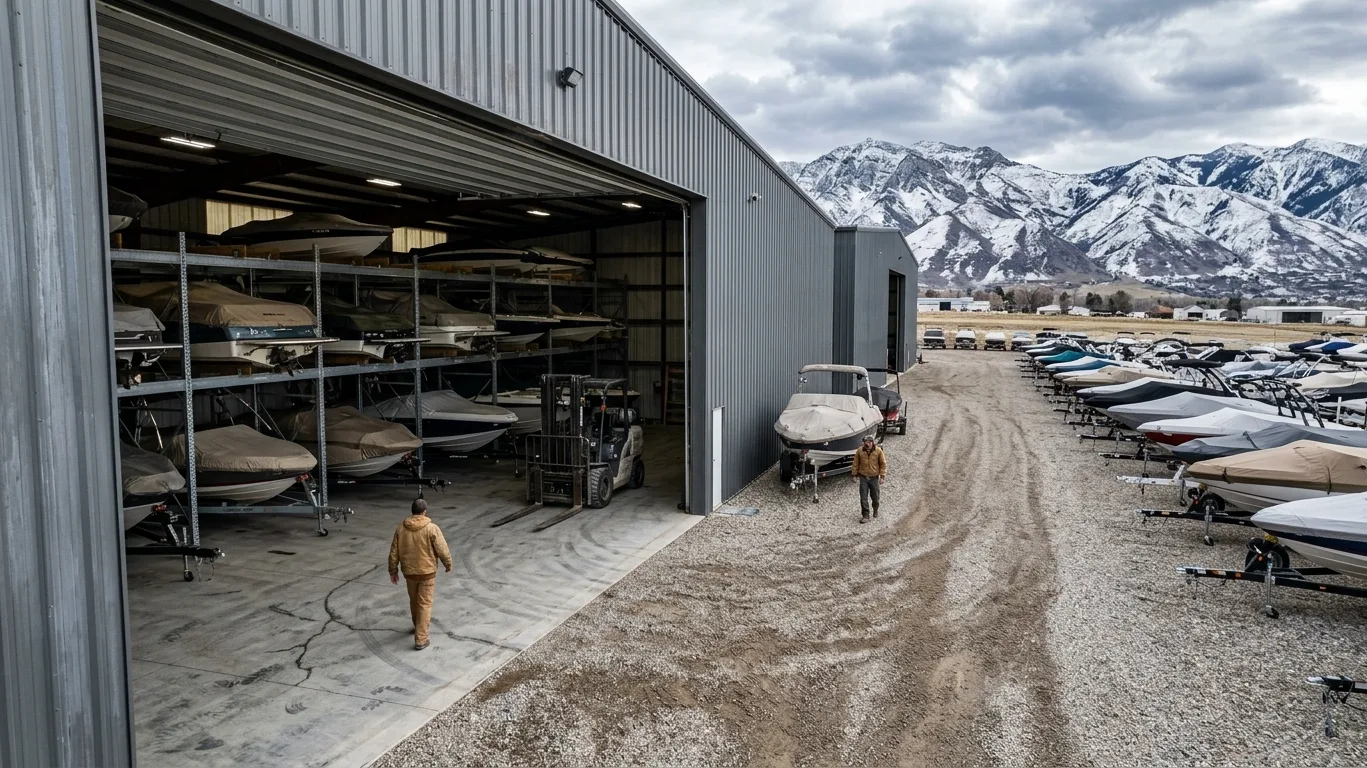
What if the boat is stored out of the water over the winter?
This is precisely one of the advantages of boats that come out of the water regularly: the hull bottom can be inspected and cleaned much more easily.
When a boat is hauled out for winter storage, it’s the right time to take a real look at the condition of the coating.
A hull bottom covered in deposits, bottom paint that is wearing away heavily or areas that are peeling all provide valuable information for deciding what work to do before the next season.
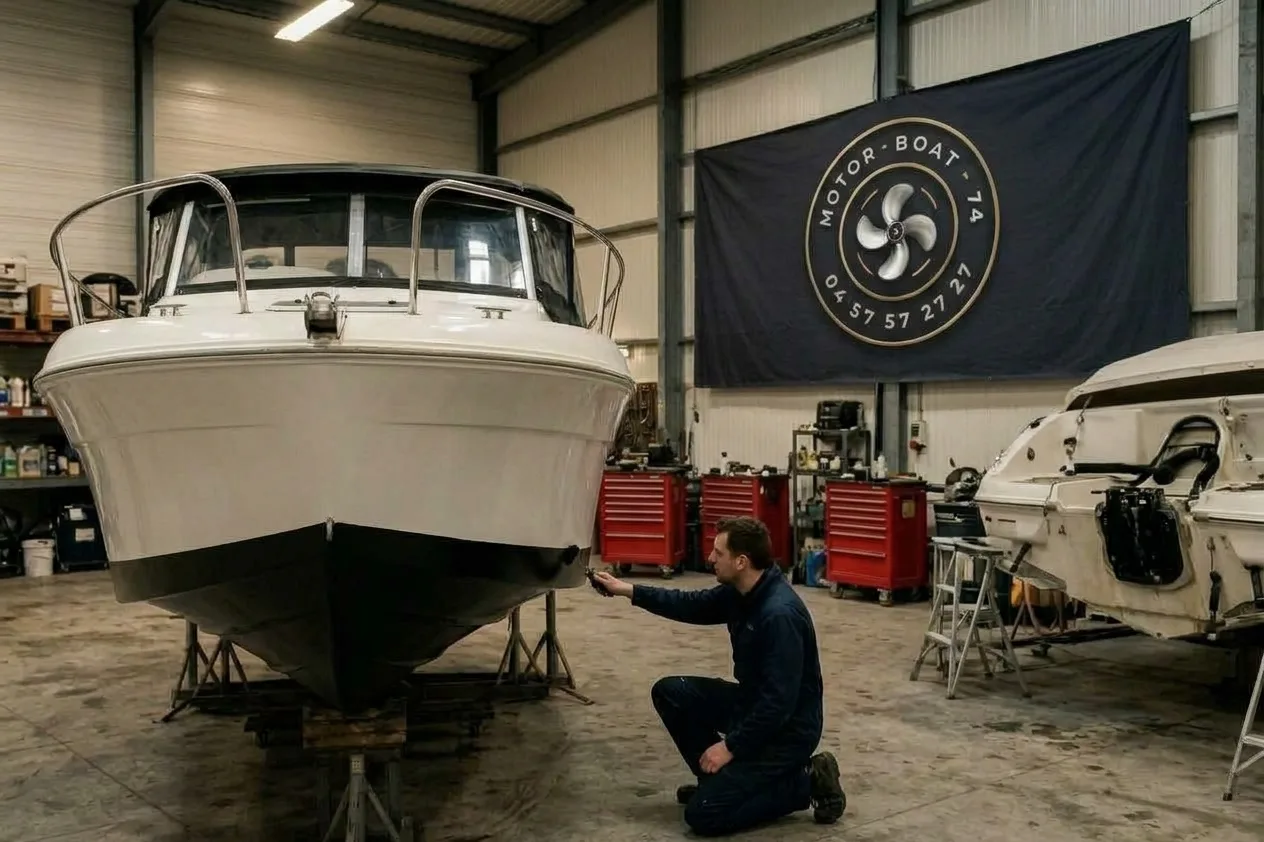
At Motor Boat 74, boat winterization in Annecy can be combined with a bottom job, including bottom paint, an epoxy barrier coat or a gelcoat check below the waterline.
The advantage is being able to do this work while the boat is already out of the water, rather than improvising it just before launching.
So, should you apply bottom paint to a boat used in fresh water?
Not automatically.
If your boat is taken out of the water after every outing, stays clean and the hull bottom is checked regularly, bottom paint may be unnecessary.
If, on the other hand, your boat stays in the water for several weeks or months and the hull bottom gets covered in fouling, bottom paint or another suitable fouling-control solution can make perfect sense, even in fresh water.
The right decision comes down to three simple questions:
- How long does my boat stay in the water?
- What condition is my hull bottom in after the season?
- Which protection system is compatible with my hull and how I use the boat?
If the answer to the second question is “the hull bottom comes out clean,” there’s no reason to redo the bottom paint out of habit.
If it comes out heavily fouled, however, you need to ask why and choose suitable protection.
In Annecy, Motor Boat 74 can carry out bottom jobs and hull treatment during the storage period, including bottom paint, an epoxy barrier coat and a gelcoat check below the waterline.
FAQ
Does a boat in fresh water need bottom paint?
Not necessarily. A boat that stays in the water for several weeks or months can, however, benefit from bottom paint to protect against fouling. For a boat regularly taken out of the water, bottom paint may be unnecessary.
Do you need to redo the bottom paint every year on a boat in Annecy?
No. First examine the condition of the hull bottom and the existing coating. How often depends on the product used, its condition, the time in the water and the level of fouling observed.
Does a boat kept on a trailer need bottom paint?
Often not, if the boat goes back on its trailer after every outing. If the boat regularly stays in the water for several days or weeks, the question may arise.
What is the difference between bottom paint and a barrier coat?
Bottom paint limits fouling on the submerged surface. An epoxy barrier coat concerns protecting and repairing the laminate or resin system of a hull when a risk or signs of osmotic blistering are identified. They are two different treatments.
Can you apply new bottom paint directly over the old one?
Not always. You need to check the condition and compatibility of the old coating. If it is peeling, flaking or has significant defects, more thorough preparation may be needed before applying a new system.
Is bottom paint useful for a boat used only on Lake Annecy?
It can be if the boat stays in the water long enough and the hull bottom gets fouled. On the other hand, a boat regularly taken out of the water may not need it. Regular cleaning and inspection of the hull remain important, particularly in the context of preventing aquatic invasive species in the lake.