How to winterize an inboard boat: the complete guide
Boat Winterization 8 min read Published August 23, 2026Updated October 21, 2026 The Motor Boat 74 team
A poorly winterized inboard engine is the number one reason a season starts with a repair bill instead of a day on the lake. Unlike an outboard, an inboard engine runs with a cooling system, a driveline (V-Drive or straight shaft) and components that sit permanently inside the hull; every one of them is vulnerable to freezing and corrosion if winterization is not done properly. Key takeaway: winterizing an inboard involves at the very least an oil change, fully freeze-proofing the cooling system, stabilizing the fuel, protecting the transmission and disconnecting the battery, in that order, with products suited to the engine (Ilmor for MasterCraft, PCM Marine for Nautique). A mistake on the cooling system can crack the engine block and cost several thousand euros in repairs come spring. At MotorBoat74, official Nautique dealer and exclusive MasterCraft importer in Haute-Savoie, inboard engine winterization has been our daily work on Lake Annecy for years. This guide covers every step we carry out ourselves on the boats entrusted to us, whether you decide to do it yourself or leave it to us. ## Why winterizing an inboard engine is different from an outboard An outboard can be removed and stored under cover in a few simple steps. An inboard, on the other hand, stays fixed in the hull all year: you cannot take it out to keep it “dry.” That constraint is what makes winterization more technical, and riskier if something goes wrong. For other types of boats, outboard, sailboat or RIB, and for choosing how to store your boat, see our complete guide to boat winterization. ### The cooling system, the first thing to watch Depending on the system on your boat (open, raw-water cooling with lake water, or closed, freshwater cooling with a heat exchanger), residual water left in the hoses, the engine block or the heat exchanger can freeze as soon as the first nights drop below freezing. Frozen water expands and can crack the engine block; it is the most expensive and most common failure after a rushed winterization. ### Ilmor Marine (MasterCraft): what you need to know for winterization Current MasterCraft boats are powered by Ilmor Marine engines, built on General Motors V8 blocks (5.7L, 6.0L, 6.2L or 7.4L depending on the model and year, in the GDI, MPI or One Drive MV8 lines). These engines have specific cooling circuits that must be completely drained before antifreeze is added; incomplete flushing is the most common mistake we see on boats that were not winterized by a professional trained on this engine.
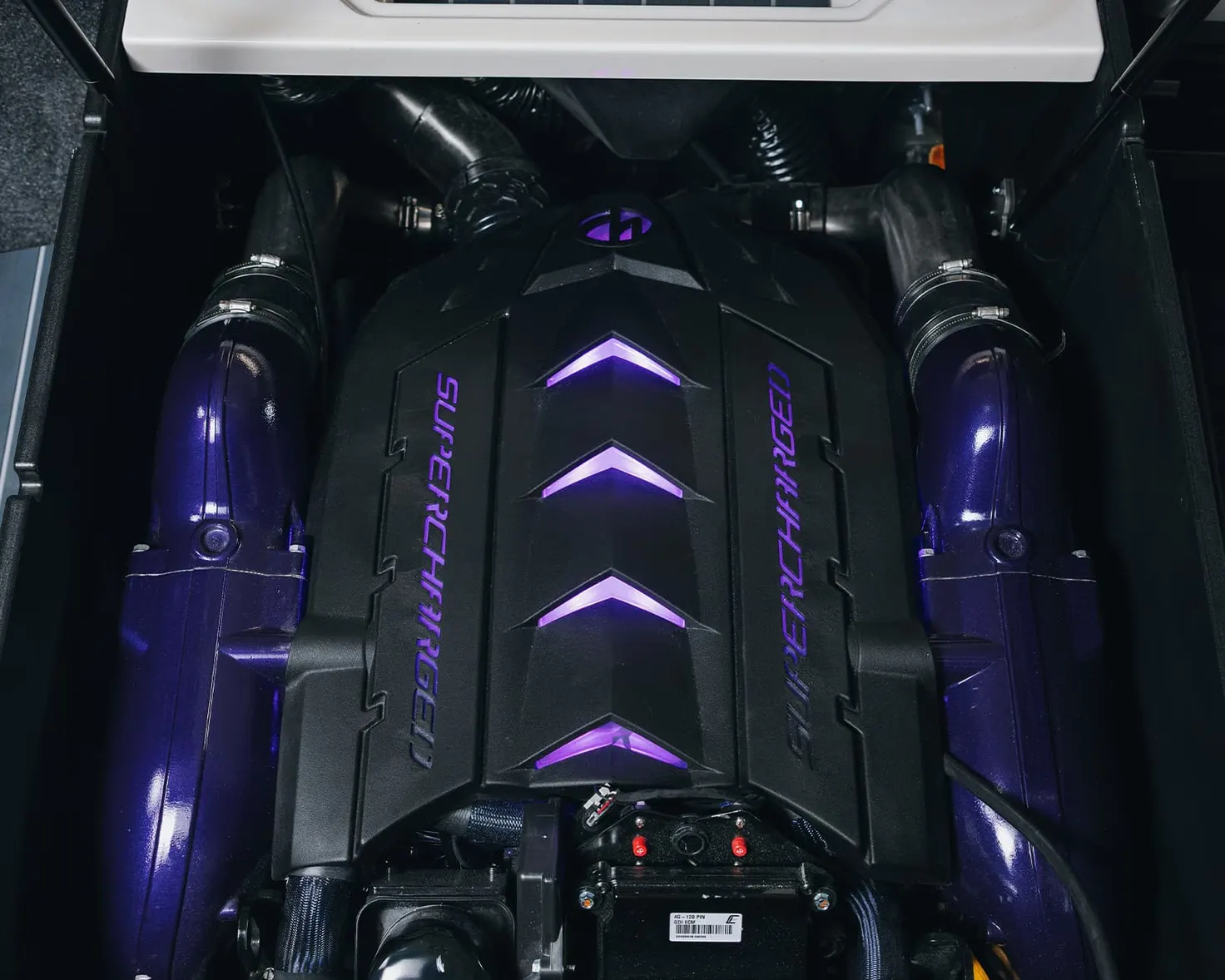
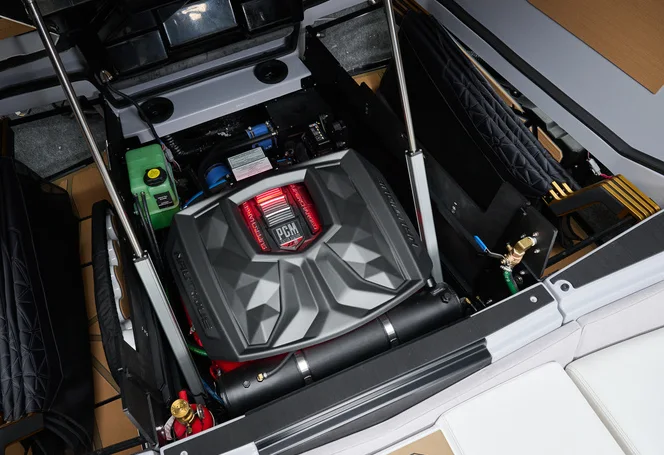
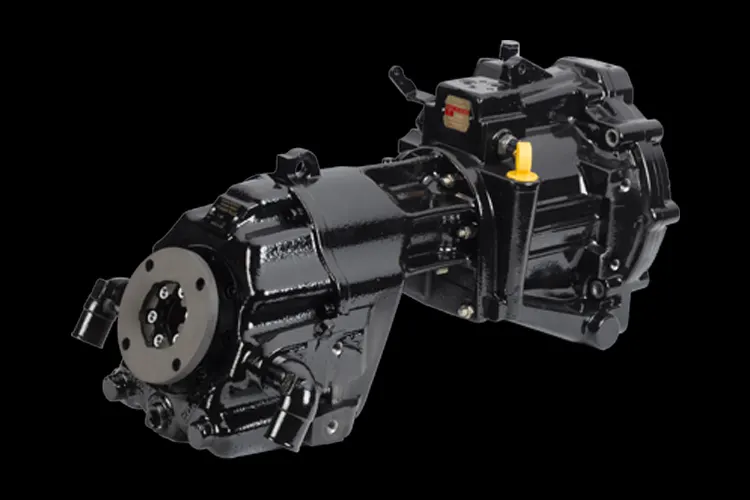
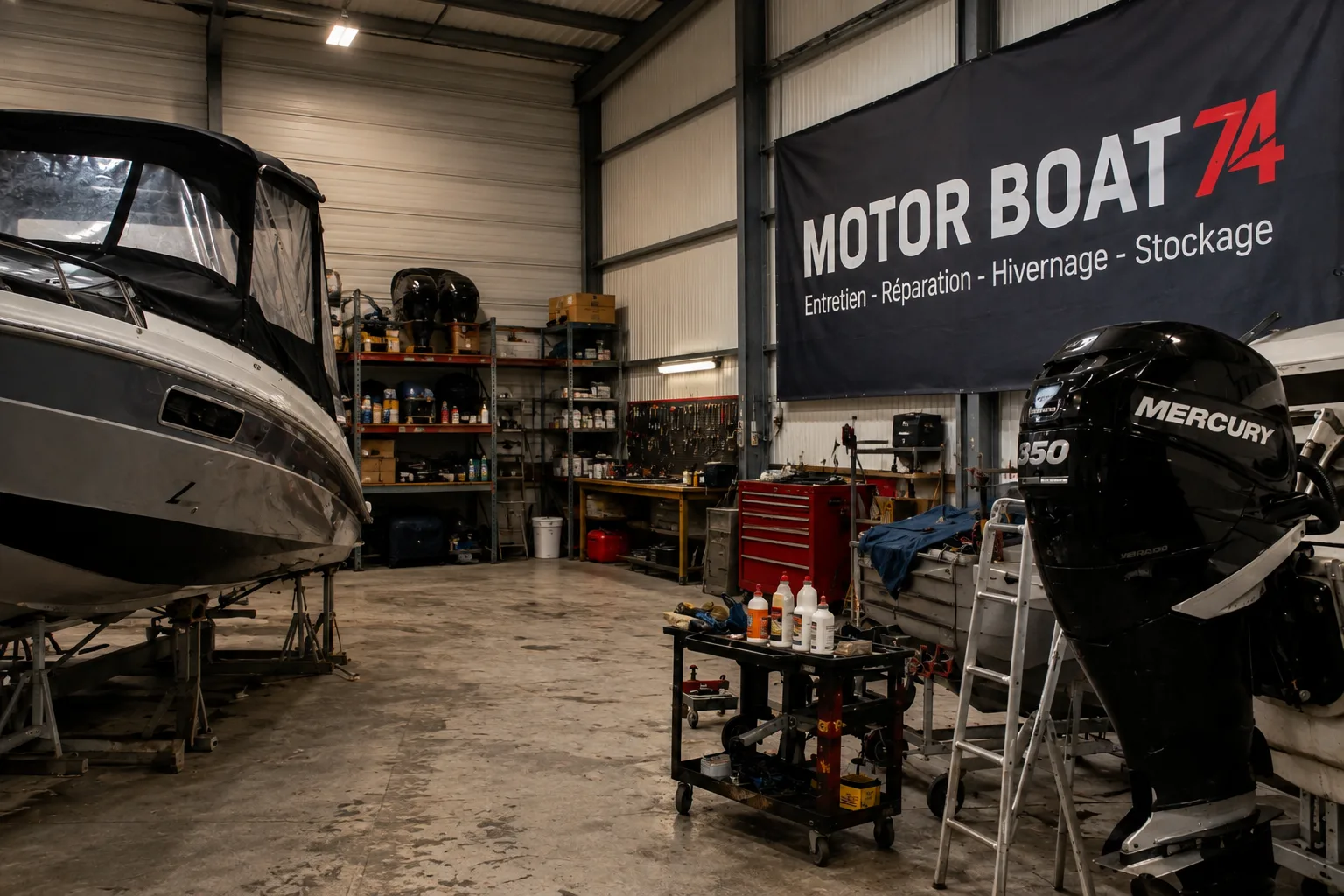
An Ilmor V8 in a MasterCraft: the winterization procedure depends on the engine version. Photo: MasterCraft ### PCM Marine (Nautique): what you need to know for winterization Nautique boats (Super Air Nautique, GS, S...) are powered by PCM Marine engines (ZR4, ZR7, ZZ5, ZZ6, ZZ8S/ZZ8R depending on the model year), usually paired with a Power Plus V-Drive transmission. Winterizing these engines calls for particular attention to the CXS exhaust system and to lubricating the driveline, both specific to this setup. PCM engine in a Nautique, engine cover open for service. ### V-Drive, Z-Drive, straight shaft: different needs depending on the transmission Beyond the engine, the type of transmission directly affects the winterization procedure: - Straight shaft: grease the stuffing box and check the alignment before launch - V-Drive: check and top up the transmission oil, inspect the seals - Z-Drive: specific anti-corrosion protection for the drive unit, similar to a conventional sterndrive A PCM V-Drive transmission: its oil should be checked before winter. Photo: Nautique ## The steps of a proper inboard winterization ### 1. Engine oil change and filter replacement Used oil contains slightly acidic combustion residues that, left in the crankcase for months, promote internal engine corrosion. We always change the oil before the winter layup, never after. ### 2. Freeze-proofing the cooling system Fully drain any residual water, then pump a dedicated marine antifreeze (non-toxic, propylene glycol based) through the entire system: engine block, heat exchanger, wet exhaust. This is the most technical step and the one where a mistake costs the most. ### 3. Fuel stabilization and cylinder protection Add a fuel stabilizer to prevent deposits and gum from forming in the fuel injection system during the long layup, then spray an anti-corrosion fogging product into the cylinders through the spark plug holes to protect the cylinder walls. ### 4. Driveline protection Depending on the setup (V-Drive, Z-Drive, straight shaft): drain and replace the transmission oil, grease the points listed above, and check the anodes that protect against electrolysis, an often overlooked but essential point in fresh water and lake water alike. ### 5. Battery: disconnection and maintenance charging A battery left connected slowly discharges all winter and can freeze once it is flat, which destroys it for good. Disconnect the terminals and, ideally, keep it on a maintenance charger. ### 6. Protecting the outside of the boat If the boat is stored outdoors: a breathable cover or mooring cover (never a waterproof plastic tarp that traps moisture), and possibly a dehumidifier if the boat is stored in an enclosed but unventilated space. In heated or climate-controlled indoor storage, this is generally taken care of by the facility itself. ## Inboard winterization: do it yourself or leave it to a professional? | | Do it yourself | Leave it to a professional | |---|---|---| | Tools needed | Drain pump, marine antifreeze, specific products, engine tools | No investment, everything is supplied | | Time required | Half a day to a full day depending on experience | None; the boat is taken care of from start to finish | | Risk of error | Real, especially when it comes to fully draining the cooling system | None, standardized procedure for each engine | | Engine knowledge | Has to be learned yourself (Ilmor, PCM, transmission) | Already mastered, including MasterCraft and Nautique specifics | | Storage included | To be arranged separately (garage, marina berth...) | Can be included (secure indoor boat storage) | Doing it yourself is entirely possible if you are comfortable with mechanics and have the right equipment. The main risk remains incomplete draining of the cooling system, a mistake that is invisible at the time of winterization and only shows up the following spring, once the cracked block is discovered. At MotorBoat74, our technicians specialize in Ilmor Marine and PCM Marine engines, with secure indoor boat storage (alarm, enclosed building) on Lake Annecy. Explore our boat storage & winterization service in Annecy → ## Mercruiser, Volvo Penta: what if my boat is neither a MasterCraft nor a Nautique? If your inboard boat is powered by a Mercruiser, Volvo Penta or any other mainstream engine brand, the main steps stay the same (oil change, freeze-proofing, fuel stabilization, transmission, battery), but the draining procedures and part numbers (filters, impellers, anodes) differ from one manufacturer to another. Our team also works on these engines as part of our boat service and repair. ## How much does it cost to winterize an inboard boat? The price of professional winterization varies with several factors: - The size and weight of the boat (more handling and more product for a 24-foot boat than for a 20-footer) - The type of engine and how complex it is to work on - The storage option you choose: outdoor under a cover, unheated indoor storage or secure indoor storage with an alarm - The services included: simple freeze-proofing, or a full package with engine service and preparation for the following season These differences make it hard to quote one reliable price: the best approach is a personalized quote, drawn up once you have specified your boat's exact model and the type of storage you want. Request your winterization quote → ## Common mistakes that damage a poorly winterized inboard engine - Only partly draining the cooling system, thinking the antifreeze will be enough to protect the rest of the residual water - Leaving the battery connected all winter, until it is completely flat and freezes - Using a waterproof, non-breathable tarp, which traps moisture and promotes corrosion instead of protecting the boat - Forgetting about the fuel, which breaks down and forms deposits in the fuel injection system after several months without stabilizer - Neglecting the protective anodes, especially in fresh water, where electrolysis can quickly damage submerged metal parts - Putting off winterization too late in the season, after the first frosts have already come ## Inboard boat winterization FAQ When should you winterize your inboard boat? As soon as nighttime temperatures regularly approach 0°C (32°F), usually between late October and mid-November in Haute-Savoie, depending on the year. It is better to plan ahead than to risk a freezing night before the work is done. Can you winterize an inboard outdoors? Yes, provided the full technical procedure has been carried out (oil change, freeze-proofing, transmission protection) and you use a suitable breathable cover or mooring cover. Indoor boat storage nevertheless remains the best protection against freezing, humidity and bad weather. How long does inboard engine winterization take? When done by a professional, the technical work itself usually takes a few hours. The boat then stays in storage until it is launched again in the spring. Do you need to change the oil on an inboard even if the boat was barely used this year? Yes; oil breaks down over time, not just with engine hours, and an engine that has seen little use is still exposed to the risk of freezing in the cooling system. ## In summary Winterizing an inboard engine requires a precise procedure specific to each engine; the most expensive mistakes come down to draining the cooling system and protecting the transmission. Whether you have an Ilmor Marine (MasterCraft) or PCM Marine (Nautique) engine, or any other engine, calling on technicians trained on your type of boat greatly reduces the risk of a breakdown in the spring. Official Nautique dealer and exclusive MasterCraft importer in Haute-Savoie, MotorBoat74 helps many owners on Lake Annecy and across the region every year with winterization and secure boat storage. 👉 Explore our boat storage & winterization service in Annecy 👉 See our Nautique models, See our MasterCraft models
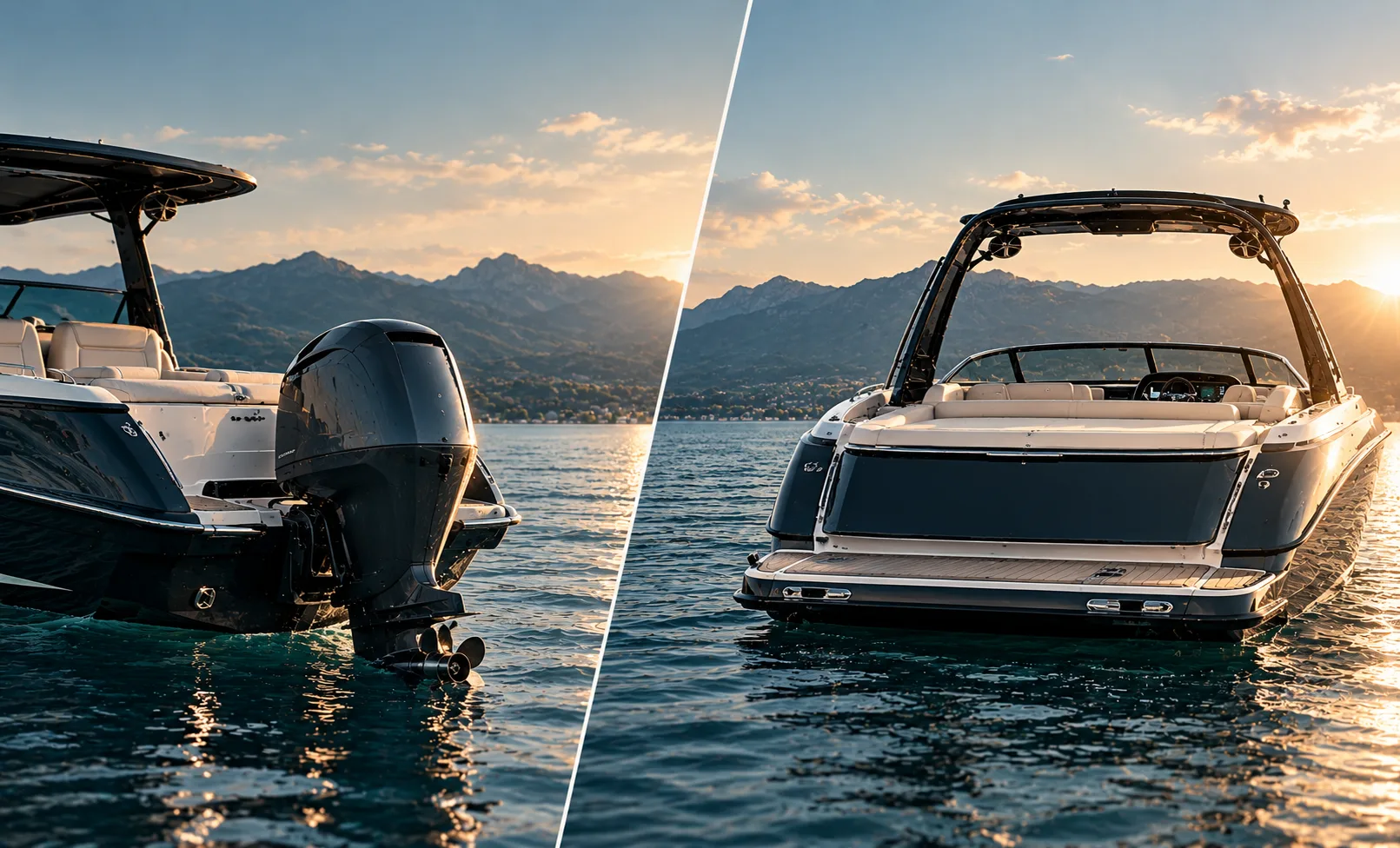
An outboard and an inboard are not winterized the same way. The difference mainly comes from their design: on an outboard, the engine and the lower unit are accessible outside the hull; on an inboard, the engine, the transmission and several systems are built into the boat.
Every fall, many owners do the same thing: take the boat out of the water, put it under cover and consider the hardest part done. On Lake Annecy, that is a costly mistake, because the real winter risk does not come from the lake, but from what remains in…