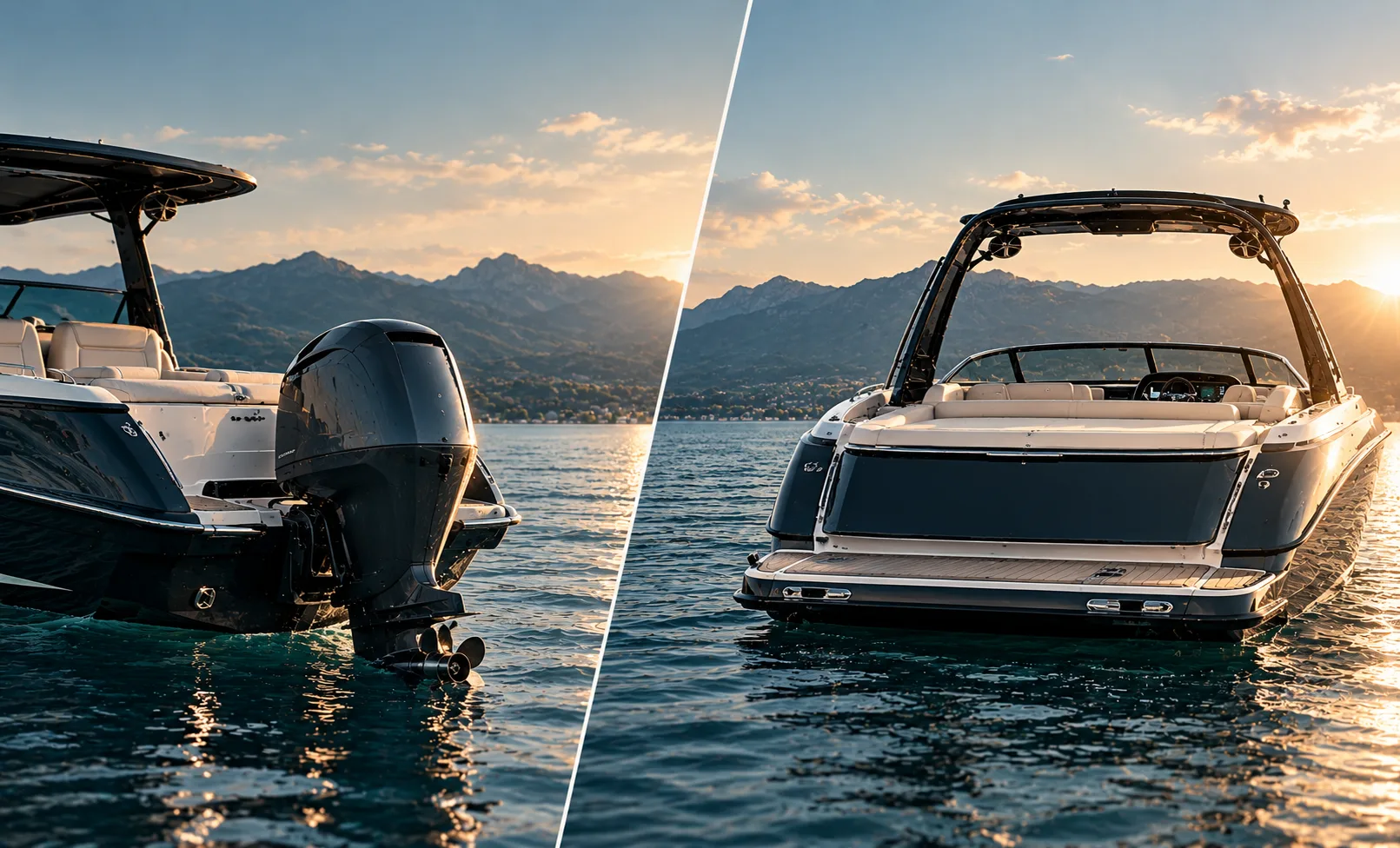
In Annecy, winter calls for proper boat preparation. But the work involved is not the same for every type of engine.
An outboard has a lower unit sitting directly in the water, while an inboard can have several cooling circuits and a transmission built into the hull. Winterization therefore has to be adapted to the engine and its configuration.
If you would like your boat prepared before winter, Motor Boat 74 offers boat storage and winterization in Annecy.
Outboard vs inboard: what really changes
| What to compare | Outboard | Inboard |
|---|---|---|
| Engine location | Outside the hull | In the engine compartment |
| Propulsion | Engine + lower unit | Transmission, depending on the boat's configuration |
| Engine access | Usually direct | Depends on access to the engine compartment |
| Cooling system | Built into the engine | May include several circuits, depending on the design |
| Handling residual water | Designed to let the engine drain when kept in the right position | Several circuits and components may need specific preparation |
| Inspection points | Engine, lower unit, propeller, anodes, lubricants | Engine, cooling, transmission and water systems |
| Winterization complexity | Often simpler | Often more technical, depending on the configuration |
Winterizing an outboard: what to focus on
An outboard is usually simpler to prepare for winter, mainly because its layout gives easy access to the engine and the lower unit.
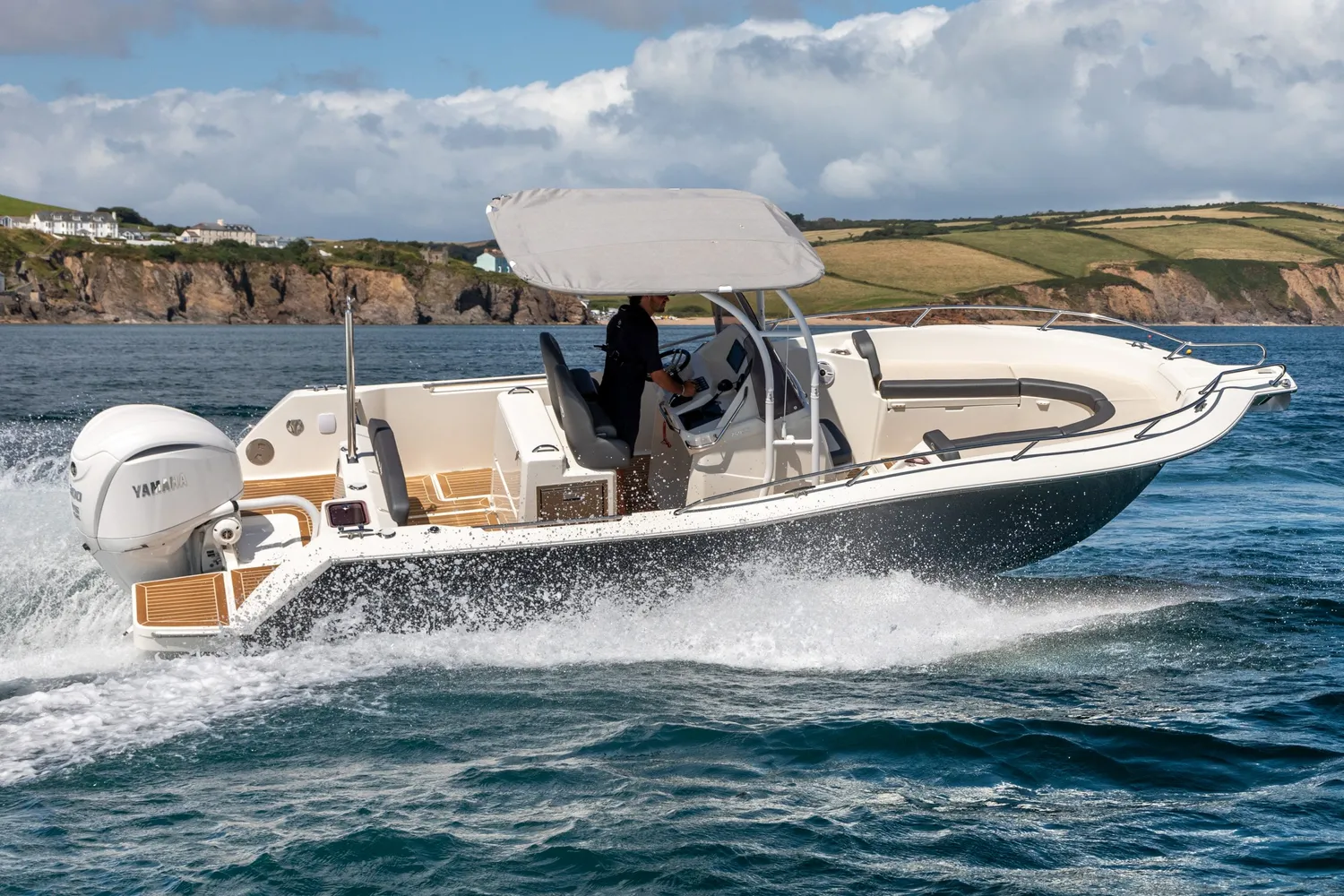
Even so, several components must be checked before a long period of inactivity.
1. The cooling system
After use, water can remain in some parts of the engine. Manufacturers provide a procedure to drain it and generally recommend storing the engine in the position they specify.
Mercury, for example, recommends storing the engine upright (vertical position) so residual water can drain out. The exact procedure should still be checked in the engine's documentation. Mercury Marine, How to Winterize Your Outboard
2. Engine oil and filters
When the maintenance schedule calls for it, the oil change and filter replacement are part of the work to do before a long layup.
There are two benefits: you carry out the scheduled service, and you avoid leaving contaminated oil in the engine for several months.
3. The lower unit: don't skip this check
The lower unit is one of the components that deserves the most attention on an outboard.
The lower unit gear oil must be checked and replaced according to the manufacturer's recommendations. Its appearance can also tell you something about its condition.
Gear oil that has turned milky or looks emulsified can indicate the presence of water. This check is especially useful before winter: water in the lower unit can cause problems if it freezes.
The propeller, the prop shaft and the anodes should also be inspected.
4. Fuel and battery
Fuel must be prepared for an extended layup according to the manufacturer's recommendations. Depending on the engine, this can include adding a suitable fuel stabilizer and running it through the system.
The battery must also be properly charged and maintained during storage.
5. Corrosion protection
After a season on the water, inspecting the areas exposed to corrosion helps spot signs of oxidation, damaged protection or parts that need replacing.
Winterizing an inboard: why you need to look beyond the engine
On an inboard, the engine sits inside the hull. Preparation therefore covers the engine block, but also the various systems and drive components connected to it.
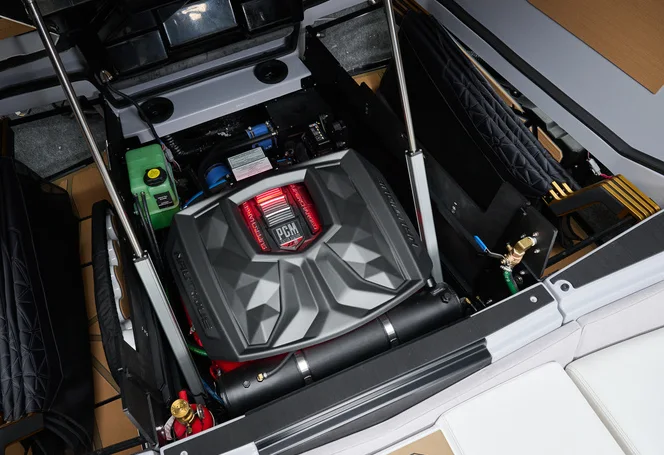
How difficult it is depends heavily on the boat's design. You need to know whether the engine uses raw-water cooling or a closed system with a heat exchanger, and identify the exact type of transmission.
The cooling system
This is one of the main things to watch.
Depending on the engine design, lake water can circulate through part of the cooling system. Some engines also have a closed circuit with a heat exchanger.
The winterization procedure must therefore identify the circuits involved, drain them when this is specified and, according to the manufacturer's instructions, protect them against freezing with the right products.
So you should never automatically apply a winterization method designed for another engine to an inboard.
The transmission
An inboard can be paired with different transmission setups: V-drive, direct drive, straight shaft or another layout depending on the boat.
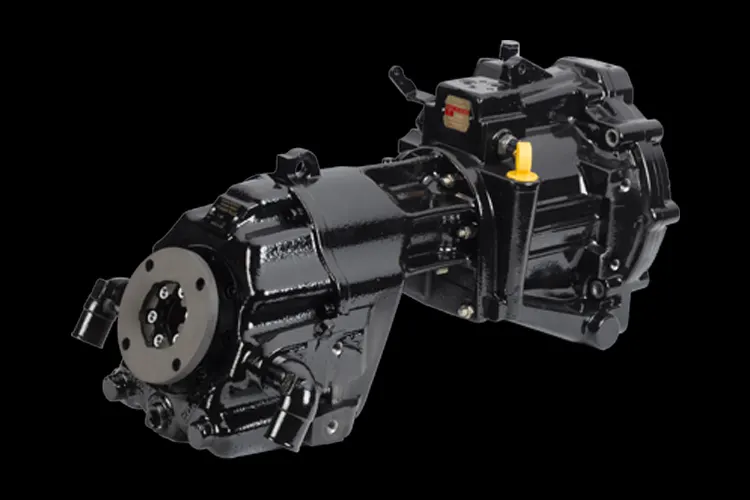
The checks and service work vary accordingly. This is one of the reasons an inboard must be winterized based on the boat's exact configuration.
Other systems that hold water
Winterization is not only about engine cooling.
Depending on how the boat is equipped, you also need to consider the freshwater system, pumps, washdown equipment, head and other equipment that may hold water.
These systems can be at risk of freezing regardless of the engine.
To learn more about the specifics of inboard engines, read our complete guide to winterizing an inboard boat.
Outboard or inboard: which is easier to winterize?
In most cases, an outboard is simpler to prepare. The engine is easy to reach and its layout makes some draining and inspection tasks easier.
But it would be wrong to conclude that an outboard needs little maintenance. The lower unit, lubricants, fuel, battery, anodes and corrosion protection must always be taken into account.
For an inboard, preparation usually takes longer because it can involve more systems and components built into the boat.
| Task | Outboard | Inboard |
|---|---|---|
| Fuel preparation | Yes, per the engine's recommendations | Yes, per the engine's recommendations |
| Engine oil change | Per the maintenance schedule | Per the maintenance schedule |
| Lubricant check | Engine and lower unit | Engine and transmission, depending on configuration |
| Corrosion protection | Yes | Yes |
| Battery check | Yes | Yes |
| Water system preparation | Depending on engine and equipment | Several possible circuits to identify |
| Transmission check | Lower unit | Depending on the propulsion system |
Why is winterization so important in Annecy?
The main winter risk is freezing in components that still hold water. But a long layup can also encourage corrosion, battery discharge and aging of fuel and lubricants.
Keeping the boat under cover does not solve these problems on its own.
You need to distinguish between:
- winterization: the technical preparation of the boat and its engine;
- storage: physically keeping the boat safe while it is laid up.
The two go hand in hand.
What should you ask the professional before winterization?
Before dropping off your boat, a few questions will tell you exactly what the service includes.
Outboard or inboard winterization: the bottom line
The key difference is not simply that the engine is “outside” or “inside.”
On an outboard, the focus is on the engine, lower unit, propeller, anodes, lubricants, fuel and battery.
On an inboard, you also have to think in terms of systems: cooling, transmission and any equipment that may hold water.
In both cases, the right approach starts from the actual engine configuration and the manufacturer's recommendations.
In Annecy, Motor Boat 74 handles boat storage and winterization with preparation tailored to your boat's engine.
FAQ
Does an outboard engine need to be winterized?
Yes. Even though its design makes it easier to drain water, an outboard must be prepared before an extended layup. Depending on the manufacturer's recommendations, the procedure can include checking lubricants, the lower unit, fuel and battery, as well as corrosion protection.
Is winterizing an inboard more complex than an outboard?
It is generally more technical, because several systems and components built into the boat may need preparing. But the complexity depends on the engine, its cooling system and its transmission.
Why check the lower unit gear oil on an outboard?
The appearance of the lubricant can reveal the presence of water. Milky or emulsified oil means you should look for a possible water leak before storage and the freezing season.
Should you use antifreeze to winterize a boat?
It depends on the engine and the systems involved. Some systems must be drained, while others call for a suitable antifreeze. Follow the manufacturer's procedure rather than applying a one-size-fits-all method.
Is indoor boat storage enough to protect a boat from freezing?
No. Indoor storage protects the boat from the weather, but it does not replace preparing the mechanical systems and equipment that may hold water.
When should you winterize your boat in Annecy?
It is best to plan winterization ahead of freezing weather rather than waiting for the first below-freezing temperatures. The ideal date depends mainly on when your boating season ends.