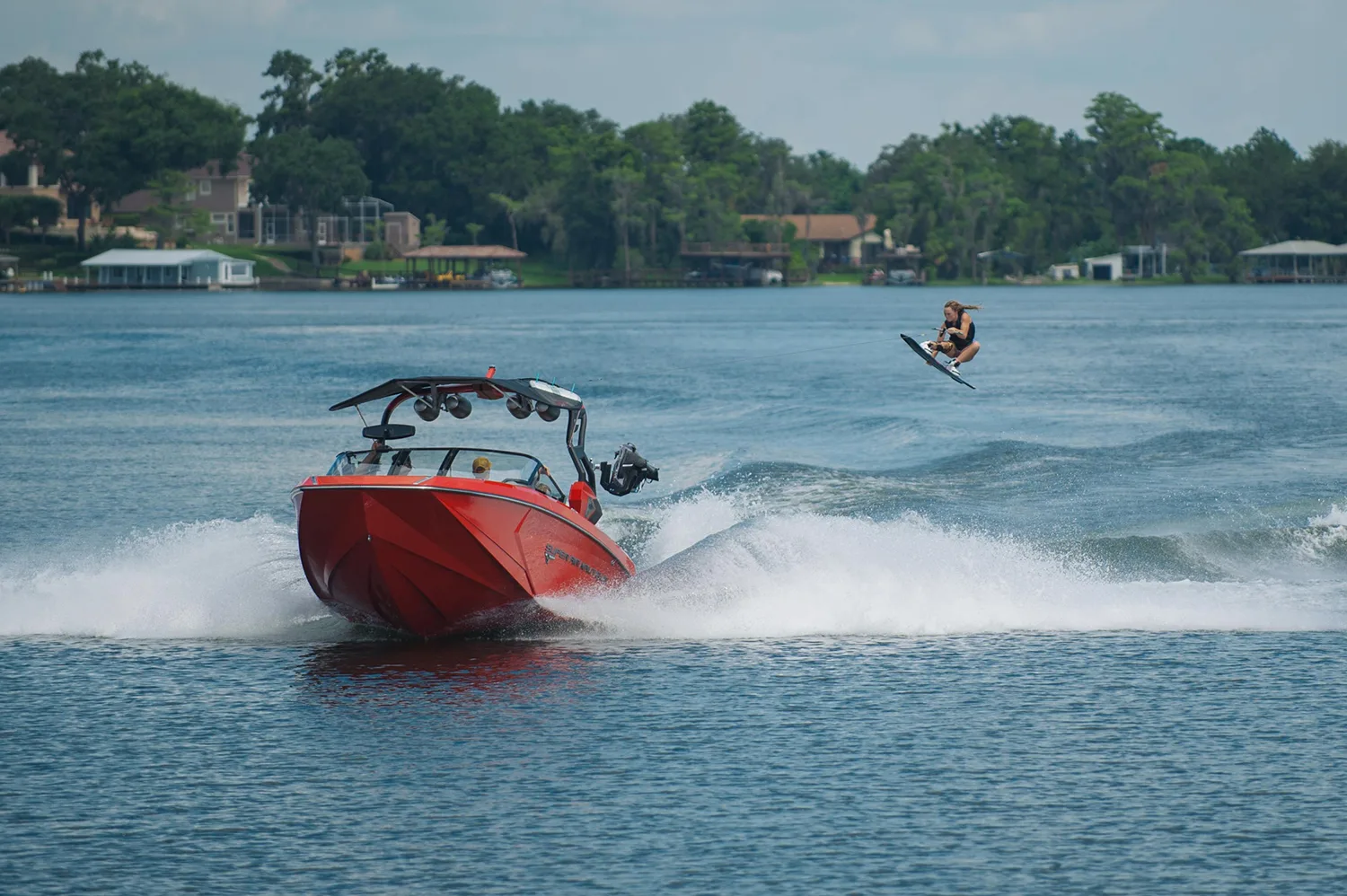
Wakeboarding happens behind a boat, and the boat makes all the difference: an easy deep-water start, a usable wake for jumps, a safe session. But between RIBs, bowriders and wake boats, the gaps in price, engine and use are huge. This guide answers every question you might have, whether you're just discovering the sport or ready to buy.
Motor Boat 74 works with water sports enthusiasts every day and distributes Connelly in France for wake and ski gear. Here's everything you need to know before choosing your boat.
1. What a good wakeboard boat should offer
Five criteria matter, whatever your budget.
- Steady speed. Towing is usually done between 25 and 35 km/h. A light beginner gets up at a lower speed; an experienced rider who wants a big wake rides faster.
- Good planing ability. The hull needs to get up on plane quickly for a steady pull.
- A usable wake. The heavier and wider the boat, the taller and cleaner the wave, and the better the jumps.
- Space and stability. You need at least a driver and a spotter, plus the gear and the other riders.
- Propeller safety. This is the most important point when someone is in the water behind the boat.
Note: some guides cite 20 knots (about 37 km/h) as a minimum. That's slalom waterski speed, not classic wakeboarding speed, which is slower.
2. Wakeboarding or waterskiing: not the same boat
- Waterskiing: a fairly small, light, nimble boat with the flattest wake possible.
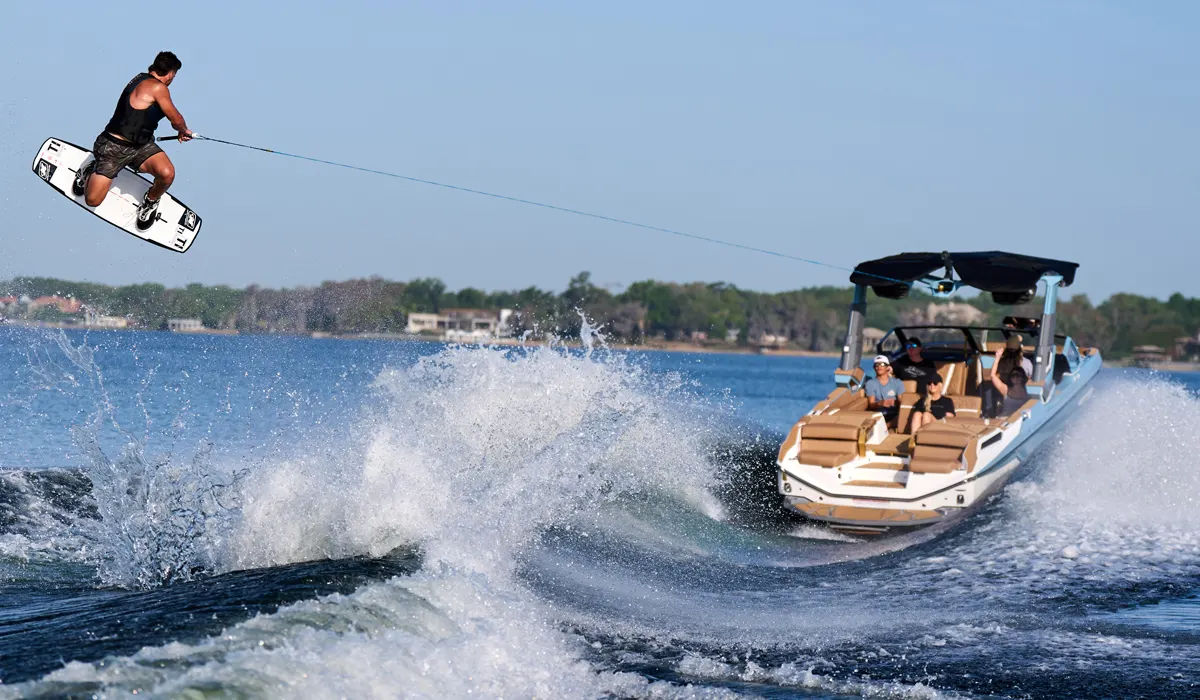
- Wakeboarding: the opposite. A bigger, heavier boat with a pronounced wake that acts as a ramp for jumps.
That's why dedicated boats use ballast: water bags or tanks that weigh down the hull and enlarge the wave on demand.
3. The 4 types of boats for wakeboarding
The RIB: the best entry point
A 5 to 6 m model with an outboard engine of around a hundred horsepower can already pull a wakeboarder. It handles well at sea and on lakes, carries several passengers and stays affordable. Its wake is modest, so it's less suited to big jumps; the propeller is at the stern, so stay vigilant when a rider falls.
The outboard runabout / day boat: versatile and family-friendly
More power and comfort, with reassuring rails for children on board. Wakeboarding is one activity among others, not the design priority.
The bowrider: the go-to for wake sports
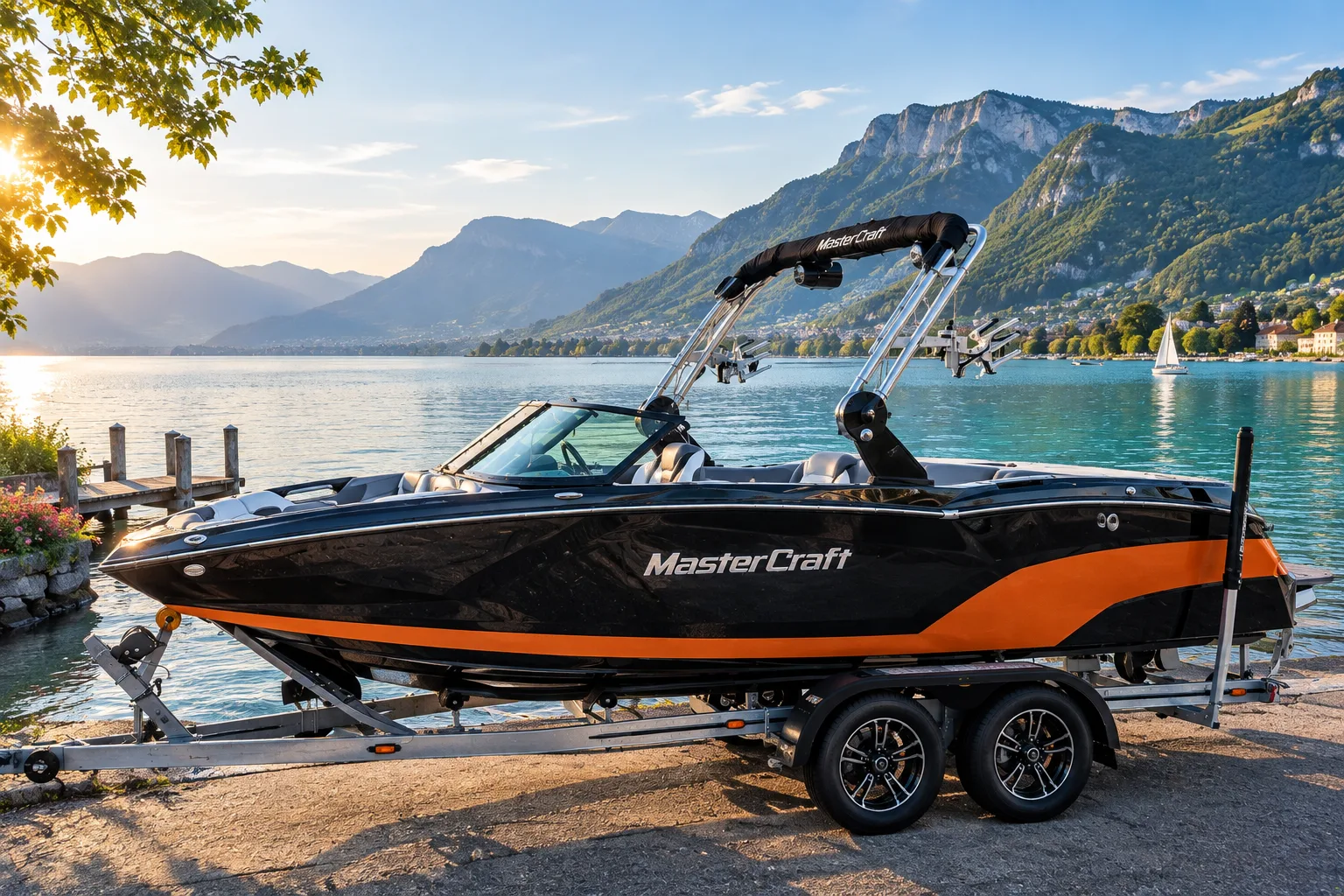
Very common, with a planing hull that holds speed well, a more consistent wake, comfortable bow seating and the option of installing a wake tower. Many models change hands on the used market. In the sterndrive version, the wake is decent but less spectacular than on a true wake boat.
The inboard wake boat: for demanding riders
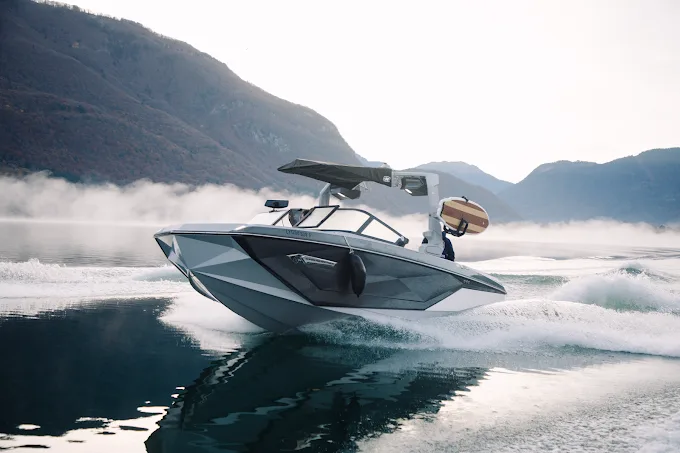
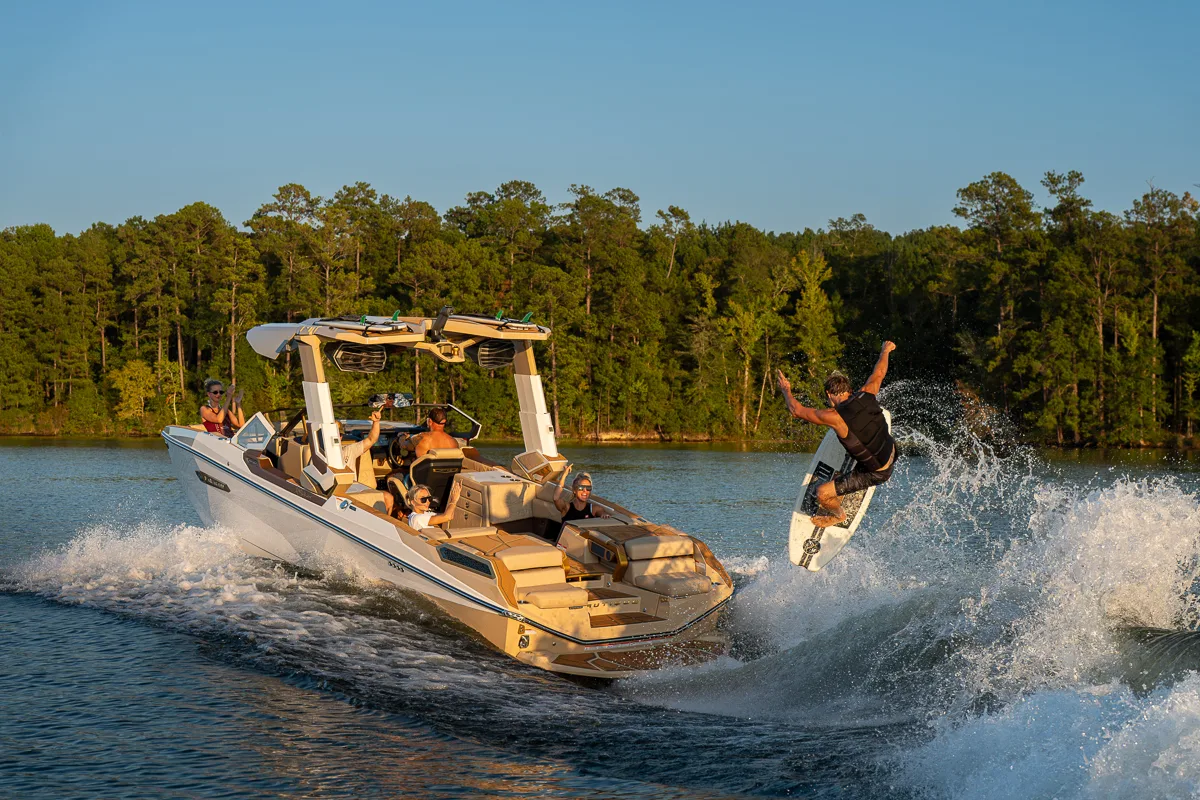
Engine placed inside the hull, propeller far from the rider, hull designed for a clean, tall wake. Complemented by ballast, a wake tower and sometimes electronically adjustable wake-shaping plates. The best performer, and also the most expensive.
At-a-glance comparison
| Type | Typical length | Indicative used budget | Wake quality | Versatility | Ideal for |
|---|---|---|---|---|---|
| RIB | 5-6 m | €15,000 - €35,000 | ★★ | ★★★★ | Beginners, mixed use |
| Outboard / open boat | 5-7 m | €20,000 - €45,000 | ★★ | ★★★★ | Families, varied outings |
| Bowrider | 5-7 m | €15,000 - €50,000 | ★★★ | ★★★ | Groups of friends, regular riding |
| Inboard wake boat | 6-8 m | €40,000 - €150,000+ | ★★★★★ | ★★ | Experienced riders, clubs |
Indicative ranges for France, covering all levels of wear and equipment. A 6-meter RIB with a 115 hp engine typically sells for between €15,000 and €35,000 depending on its year and condition.
4. Inboard, outboard, sterndrive: which engine?
It's an often overlooked criterion, yet it's decisive for safety and wave quality.
- Outboard: engine mounted at the stern, propeller exposed. Good price-to-power ratio, simple maintenance, but the propeller remains a concern if a rider falls close to the boat.
- Sterndrive (inboard/outboard): engine inside, drive unit and propeller outside. Common on bowriders. Fine for wakeboarding but doesn't produce an optimal wave, and wakesurfing behind it is not recommended because the propeller stays too close to the rider.
- True inboard: engine entirely inside the hull, direct drive to the propeller under the hull. This is the wake boat configuration: propeller far from the rider, the best-performing wake, but a higher budget and more maintenance.
5. New or used: how much should you budget?
Why used boats are appealing
A new boat loses 20 to 25% of its value in the first year, then 8 to 12% a year until it's 7-8 years old, before depreciation levels off. As a result, buying used lets you save significantly compared with new, as long as you check the boat carefully.
- The sweet spot: aiming for a boat that's 3 to 5 years old lets you enjoy a still-modern model at a price well below new, while keeping good resale value.
- Additional costs when buying used: professional marine survey (€300-600), registration (€150-300), first insurance policy (€250-600), to budget on top of the listed price.
Observed price ranges
| Segment | New | Used |
|---|---|---|
| RIB 5-6 m, ~100-150 hp | €40,000 - €70,000 | €15,000 - €35,000 |
| Family bowrider | €60,000 - €100,000 | €15,000 - €50,000 |
| Entry-level inboard wake boat | €80,000 - €130,000 | €40,000 - €90,000 |
| High-end inboard wake boat | €150,000+ | €90,000 - €150,000+ |
On the French market, waterski and wakeboard boats sell for anywhere from about €8,500 at the entry level to several million euros at the high end, which shows how broad the market is, from the small used RIB to the competition wake boat.
6. How to finance your boat
Depending on your situation, there are several options:
- Purchase loan / boat loan: offered by dealers or specialist lenders, often over 5 to 12 years.
- Lease with purchase option (LOA): attractive if you want to change boats regularly.
- Cash purchase: avoids interest but ties up a large amount of capital.
- Boat co-ownership or fractional ownership: increasingly common as a way to lower the cost per person on high-end models.
Always ask for a payment estimate before committing, and factor insurance, mooring (marina or boat trailer) and annual service into the real cost.
7. Where to buy your wakeboard boat
- From a professional / dealer (like Motor Boat 74): warranty, trade-in available, boat financing, after-sales service, advice tailored to your riding.
- From a private seller: prices are often lower, but there's no warranty without a specific contract; be sure to have the boat surveyed before buying.
- Specialist listing sites: useful for comparing market prices, but cross-check with a professional's opinion before deciding.
8. Pre-purchase checklist
- Where will you be boating (lake, calm sea, rough sea)?
- How many people will regularly be on board?
- Beginner, intermediate or experienced rider looking for a big wake?
- Total budget (purchase + insurance + marina/boat trailer + annual service)?
- New, recent used (3-5 years) or older used?
- The right engine: outboard, sterndrive or inboard?
- Does it have, or can it take, a wake tower and ballast?
- Inspection / marine survey done if buying used?
- Boating license suited to the engine power and the boating area?
9. Essential towing gear
A good boat isn't enough. You will also need:
- A handle and tow rope of about 20 m, designed for wakeboarding.
- A wake tower or ski pylon, which improves the pull and the pop on jumps.
- Life jackets for every rider, including strong swimmers.
- A board and bindings suited to the rider's level. Motor Boat 74 distributes Connelly in France: boards, skis and water sports gear for every level. Discover the Connelly range 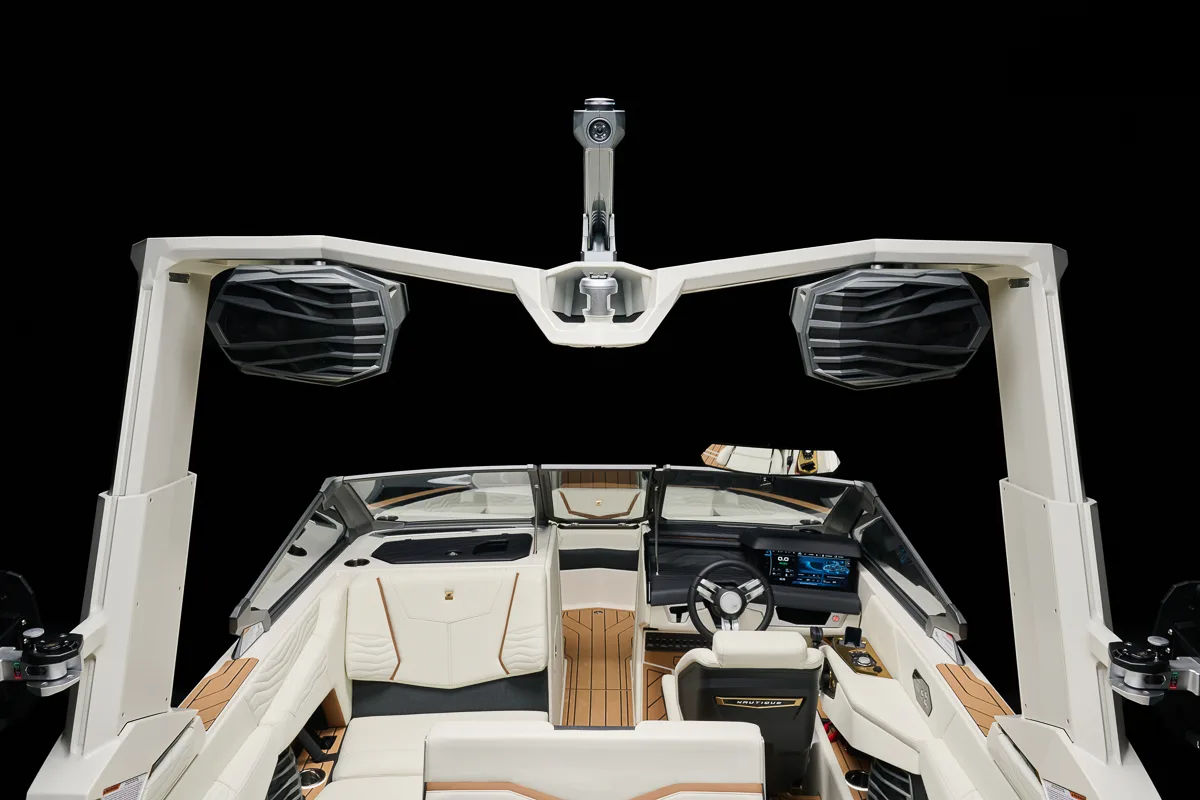
- Knowing how to swim is a basic requirement, even with a life jacket.
- At least two people on board: a driver and a spotter who watches the rider at all times.
- Agree on hand signals before setting off, without music that's too loud.
- 300 m coastal zone: towing takes place outside it, using the designated access channels.
- A boating license is required above a certain engine power (coastal or inland waters option depending on where you boat).
- Local regulations: they vary from one lake or sea area to another; check with the prefecture or the maritime authorities.
- Engine service: oil changes, anodes, winterization; expect several hundred euros a year depending on the engine.
- Insurance: varies with the boat's value and power.
- Marina berth or boat trailer: a recurring cost often underestimated at purchase.
- Bottom paint and hull (for use at sea): annual maintenance to plan for.
- Inspection of the wake tower, ballast and towing system before each season.
10. Safety and regulations
11. Maintenance and annual costs
12. FAQ
What's the best wakeboard boat for beginners?
A 5 to 6 m RIB with 90 to 150 hp, or a used bowrider. These are the most affordable boats to learn and progress on.
Can you wakeboard behind an outboard boat?
Yes, but with care: the propeller is close to the rider after a fall. An attentive driver and a spotter are essential.
How much power do you need to pull a wakeboarder?
Around 90 hp minimum on a light RIB; a bigger boat or more aggressive riding requires more.
What is ballast for?
It weighs the boat down and enlarges the wave, which improves jumps. Mostly useful on wake boats and some bowriders.
New or used boat for a first purchase?
Used, ideally 3 to 5 years old, offers the best balance between modern features and price. Always have the engine and hull checked by a professional before buying.
How much does a wakeboard boat cost?
From around €15,000 for a well-equipped used RIB to more than €150,000 for a high-end new inboard wake boat. The budget depends mainly on the hull type and the engine.
Do you need a license to pull a wakeboarder?
Yes, a boating license suited to the engine power and the boating area (coastal or inland waters) is mandatory.
Rent or buy to get started?
Renting a boat with a driver (usually €80-150 per hour) lets you try the sport before investing in a purchase.
Conclusion
The right wakeboard boat depends on your level, where you boat, your budget and how often you ride. A used RIB or bowrider is more than enough to start and progress; the inboard wake boat remains the choice of the most demanding riders who want the best possible wake.
Planning a purchase or have a question about your setup? The Motor Boat 74 team is here to advise you. Contact us